September Feast Days (Our Lady of Sorrows, St. Matthew, The Archangels + More)
Sep 01, 2024September is a beautiful bridge from summer into fall, and the Church fills it with the tender love of Our Lady of Sorrows, the month’s devotion, along with St. Matthew, the three great Archangels, and a host of inspiring saints. As families settle into new routines, these feast days are a gentle way to keep Christ at the center of the new school year.
🎨 Getting into a gentle back-to-school rhythm?
Start the new season with the saints—the easy way. Our free Catholic Creativity Corner is full of ready-to-print saint activities, coloring pages, and feast day crafts for your family, homeschool, or parish group. Sign up once for instant access, plus new free printables every month.
Monthly Overview
Tap any feast below to jump straight to it. ↓
-
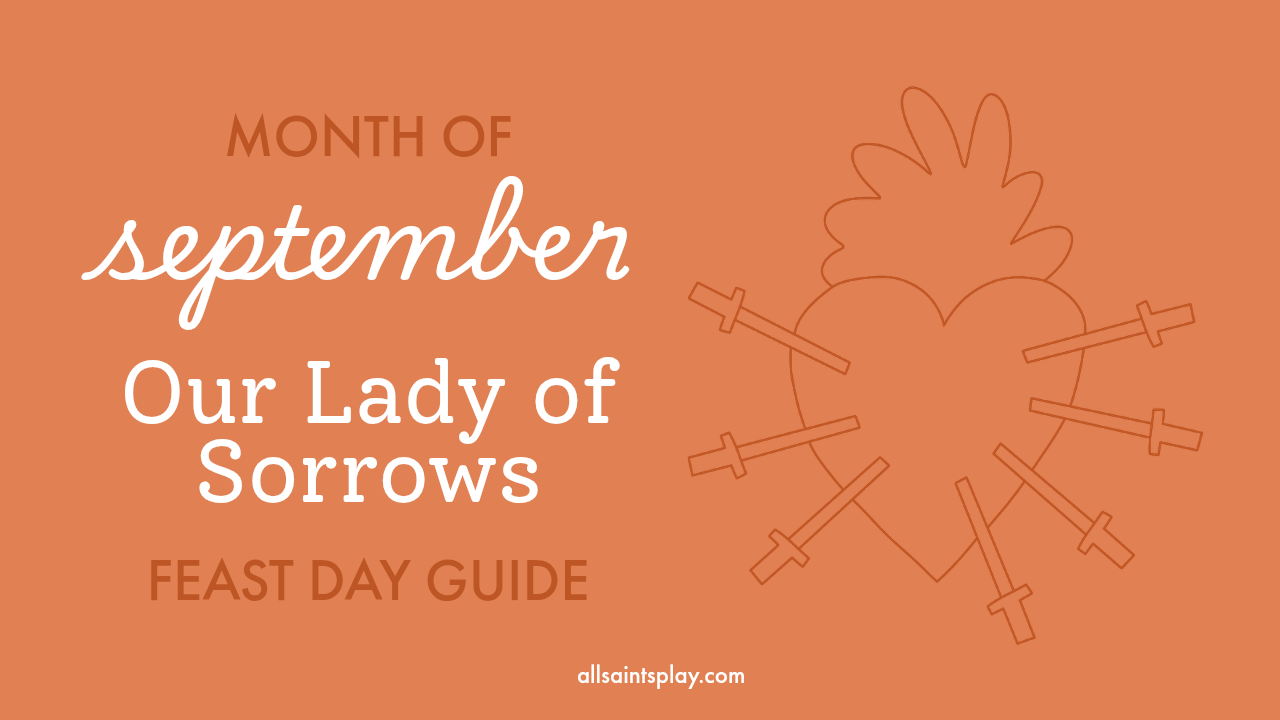
Monthly Devotion: Our Lady of Sorrows
-
Key Feast Days & Saint Celebrations:
-
September 2: St. Ingrid of Sweden
-
September 13: St. Notburga
-
September 15: Our Lady of Sorrows
-
September 21: St. Matthew the Apostle
-
September 28: St. Lorenzo Ruiz
-
September 28: St. Wenceslaus
-
September 29: Sts. Michael, Gabriel & Raphael, the Archangels
-
About the Monthly Devotion: Our Lady of Sorrows
September is dedicated to Our Lady of Sorrows, honoring the loving heart of Mary that shared so deeply in the sufferings of her Son. The Church remembers her Seven Sorrows—from the prophecy of Simeon to holding Jesus in her arms at the foot of the Cross. Through every sorrow, Mary never stopped trusting God, and so this devotion invites us to bring our own hurts to her, knowing she understands and always points us to Jesus.
Family Ideas for September:
-
Pray a decade of the Rosary for someone who is hurting.
-
Learn the Seven Sorrows of Mary together as a family.
-
Display an image of Our Lady of Sorrows in your home.
-
Do a quiet act of kindness for someone who is sad.
Bring the September devotion into your mornings. Our Catholic Morning Menu features a beautiful cover and tracing page for each month’s traditional devotion—including September’s devotion to Our Lady of Sorrows—plus prayers, a Bible memory verse, the liturgical season, and gentle preschool learning to start each day with the faith. See the Morning Menu →
September 2: St. Ingrid of Sweden
Fun Facts:
-
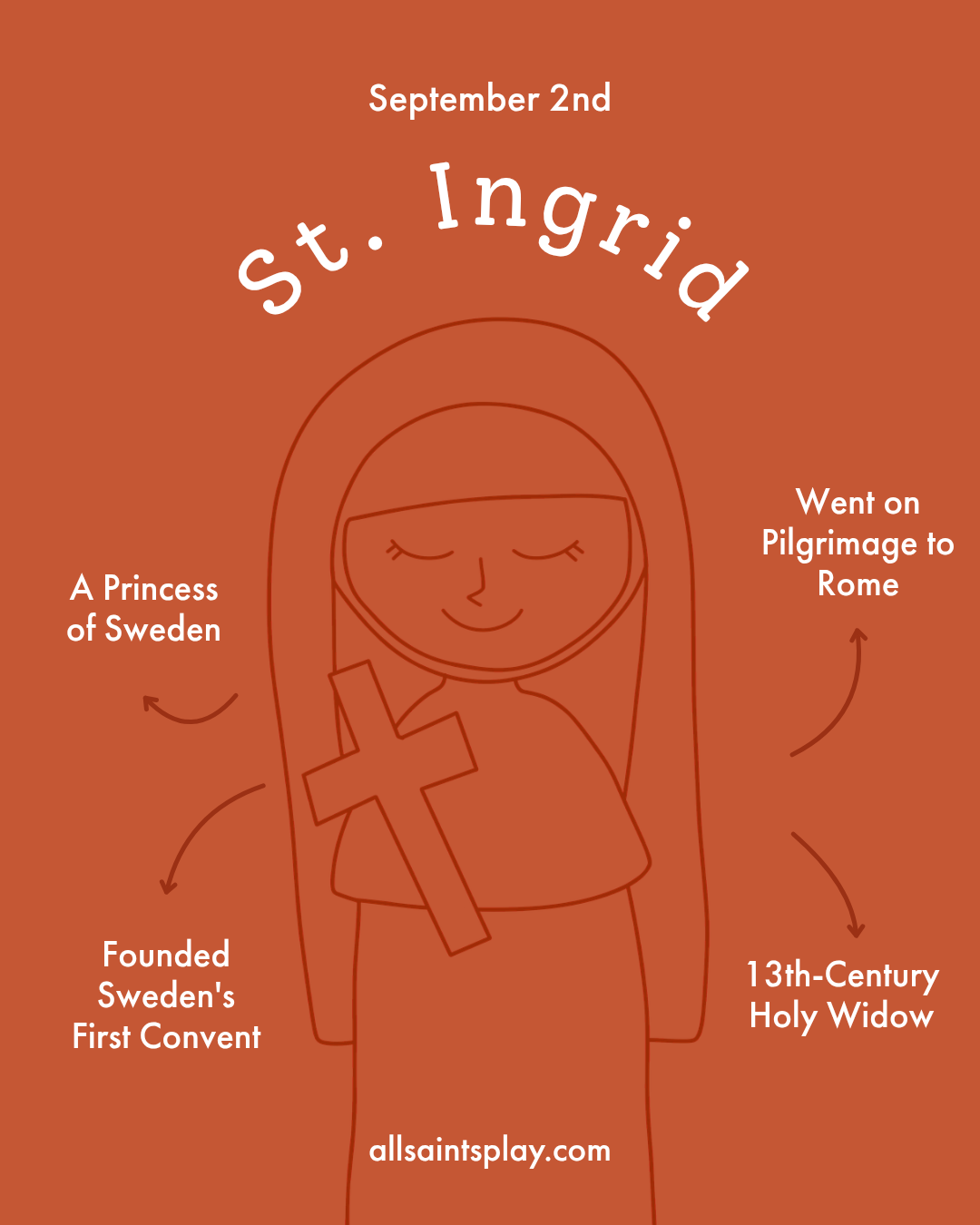
St. Ingrid was a princess in Sweden.
-
She started the first Dominican convent in Sweden.
-
She went on pilgrimages to the Holy Land and Rome.
Ways to Celebrate:
-
Learn about Sweden and its culture.
-
Make a paper crown to remember St. Ingrid was a princess.
-
Draw a picture of a convent.
-
Pray for missionaries who travel to teach about Jesus.
-
Do a kind deed for someone, like St. Ingrid did.
Her Story:
St. Ingrid of Sweden was born to a noble family in Sweden in the 1200s. After her husband died, she chose to give her life fully to God rather than seek comfort or riches. Inspired by the Dominican friars, she founded the very first Dominican convent in Sweden, a home where women could pray, study, and serve the poor together. She made pilgrimages to Rome and the Holy Land, and she was so loved for her holiness that people reported miracles after her death. St. Ingrid reminds us that it is never too late to give our whole hearts to God.
What Kids Can Learn from St. Ingrid:
God has a special plan for each of us, and it is never too late to say yes to Him. Even after hard times, we can choose to love and serve God with our whole hearts.
A Little Prayer:
St. Ingrid, you gave your life to God and served others with a joyful heart. Help our family to be brave, to love God above all, and to care for those in need. St. Ingrid, pray for us. Amen.
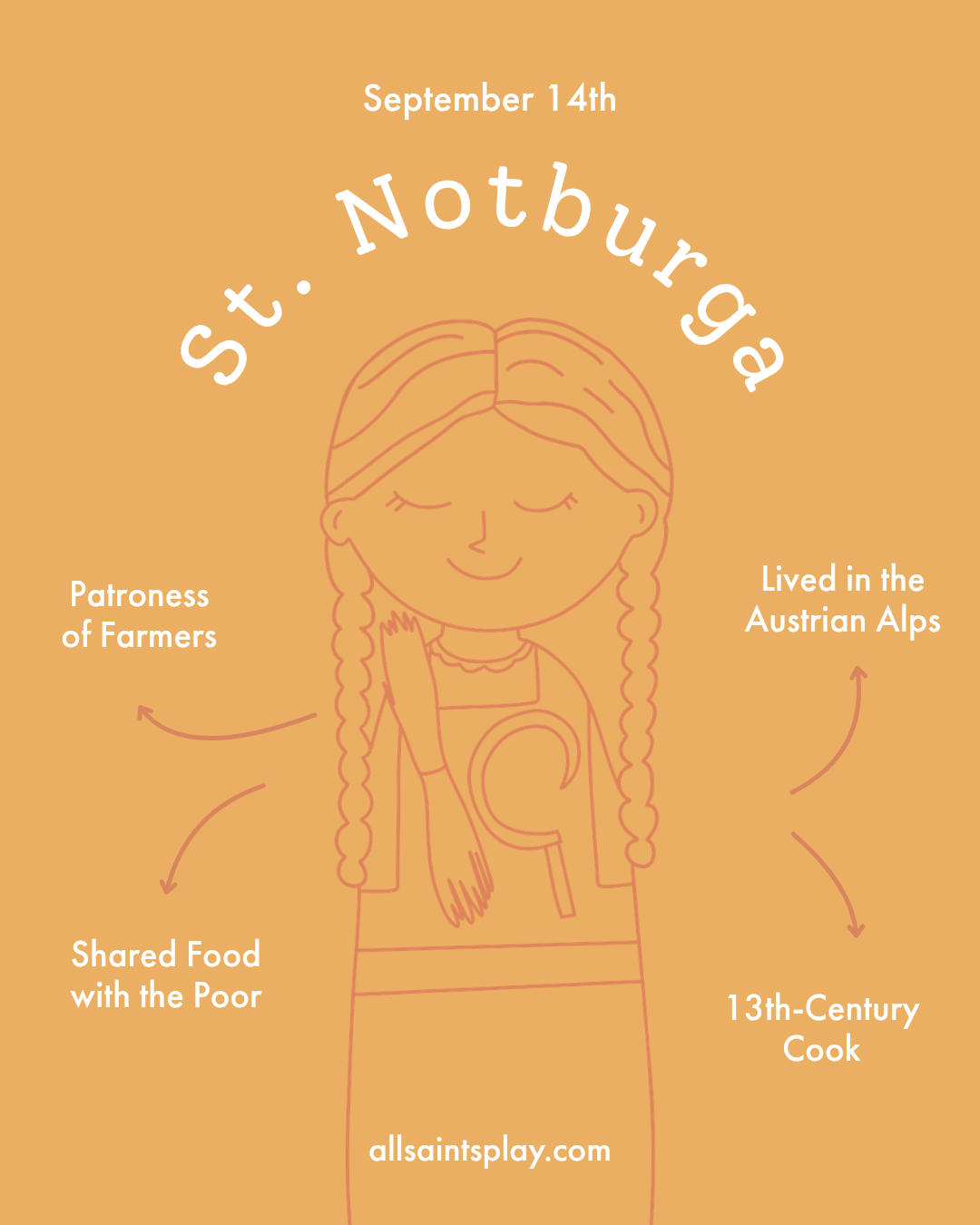
September 13: St. Notburga
Fun Facts:
-
St. Notburga was a cook for a rich family.
-
She always shared food with the poor.
-
There’s a story about her sickle (a tool for cutting grass) hanging in the air!
Ways to Celebrate:
-
Help make dinner for your family.
-
Donate food to a local food bank.
-
Draw a picture of St. Notburga’s floating sickle.
-
Say a prayer for farmers.
-
Learn about different cooking tools.
Her Story:
St. Notburga lived in the mountains of Austria in the 1200s. She worked as a cook and servant for a wealthy family, and she always saved part of her own meals to share with the poor and hungry. When she was told to stop, she trusted God and quietly kept helping those in need. A beloved legend says that when her honesty was doubted, she tossed her sickle into the air and it hung there, showing that God was on her side. Today she is honored as the patroness of servants, farmers, and hard workers.
What Kids Can Learn from St. Notburga:
God sees the good we do, even the small and hidden things. We can serve Him by being generous and honest in our everyday work.
A Little Prayer:
St. Notburga, you shared what you had with the poor and worked hard for God. Help our family to be generous, honest, and kind in the little things we do each day. St. Notburga, pray for us. Amen.
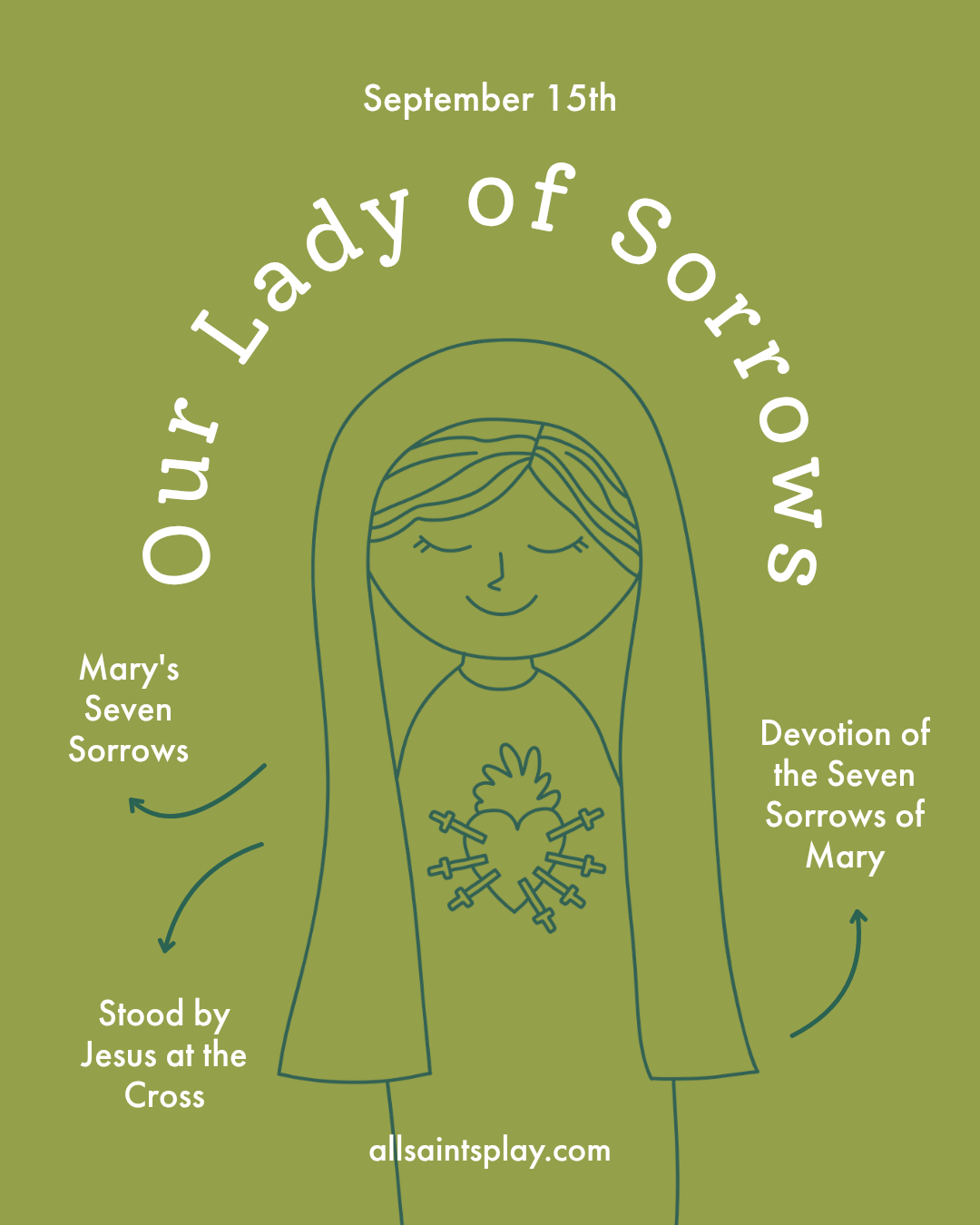
September 15: Our Lady of Sorrows
Fun Facts:
-
This feast remembers the sad times in Mary’s life.
-
There are seven sorrows of Mary that we think about on this day.
-
Mary is often shown with seven swords in her heart to represent her sorrows.
Ways to Celebrate:
-
Make a card to cheer up someone who is sad.
-
Pray the Rosary with your family.
-
Draw a picture of Mary to show her love for Jesus.
-
Do something nice for your mom.
-
Learn about the seven sorrows of Mary.
The Story:
The feast of Our Lady of Sorrows remembers the deep sorrows Mary carried in her heart as the mother of Jesus. The Church honors seven special sorrows in her life—from fleeing to Egypt as a young mother to standing faithfully beneath the Cross as Jesus died. Mary is often shown with seven swords piercing her heart to show how much she suffered out of love. Yet through every sorrow she never stopped trusting God. Because she knows what it feels like to grieve, Mary is a tender comfort to anyone who is hurting.
What Kids Can Learn from Our Lady of Sorrows:
Mary understands our sadness and stays close to us when we hurt. Even in hard times, we can trust God the way she did.
A Little Prayer:
Our Lady of Sorrows, you stayed close to Jesus even when it was very hard. Comfort our family when we are sad, and help us to trust God in every part of our lives. Mother Mary, pray for us. Amen.
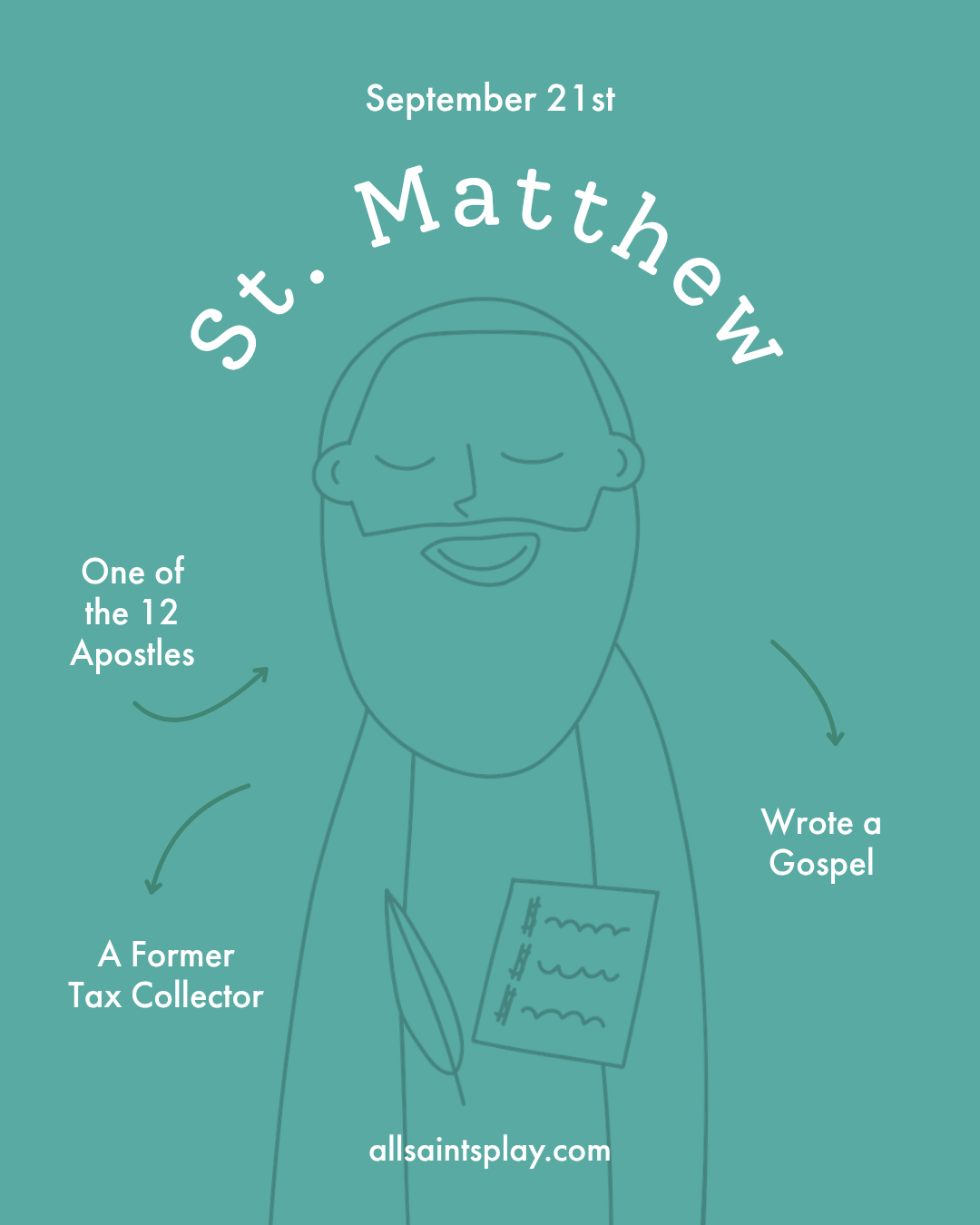
September 21: St. Matthew the Apostle
Fun Facts:
-
St. Matthew was a tax collector before becoming Jesus’ disciple.
-
He wrote one of the Gospels in the Bible.
-
His symbol is often a winged man.
Ways to Celebrate:
-
Read a story from the Gospel of Matthew.
-
Make a coin craft to remember Matthew’s job as a tax collector.
-
Draw a picture of an angel to represent Matthew’s symbol.
-
Practice math, since Matthew worked with numbers.
-
Say a prayer asking God to help you follow Jesus like Matthew did.
His Story:
St. Matthew worked as a tax collector, a job that made him unpopular because tax collectors often cheated people. One day Jesus walked by, looked right at Matthew, and simply said, “Follow me.” At once Matthew got up, left his money table behind, and became one of Jesus’ twelve Apostles. He later wrote the Gospel of Matthew, one of the four books that tell us the story of Jesus’ life and teachings. His symbol is a winged man, because his Gospel begins with the human family of Jesus.
What Kids Can Learn from St. Matthew:
Jesus calls each of us, no matter our past. When we hear Him, the best thing we can do is get up and follow, just like Matthew did.
A Little Prayer:
St. Matthew, you left everything to follow Jesus the moment He called you. Help our family to listen for Jesus’ voice and to follow Him with joy. St. Matthew, pray for us. Amen.
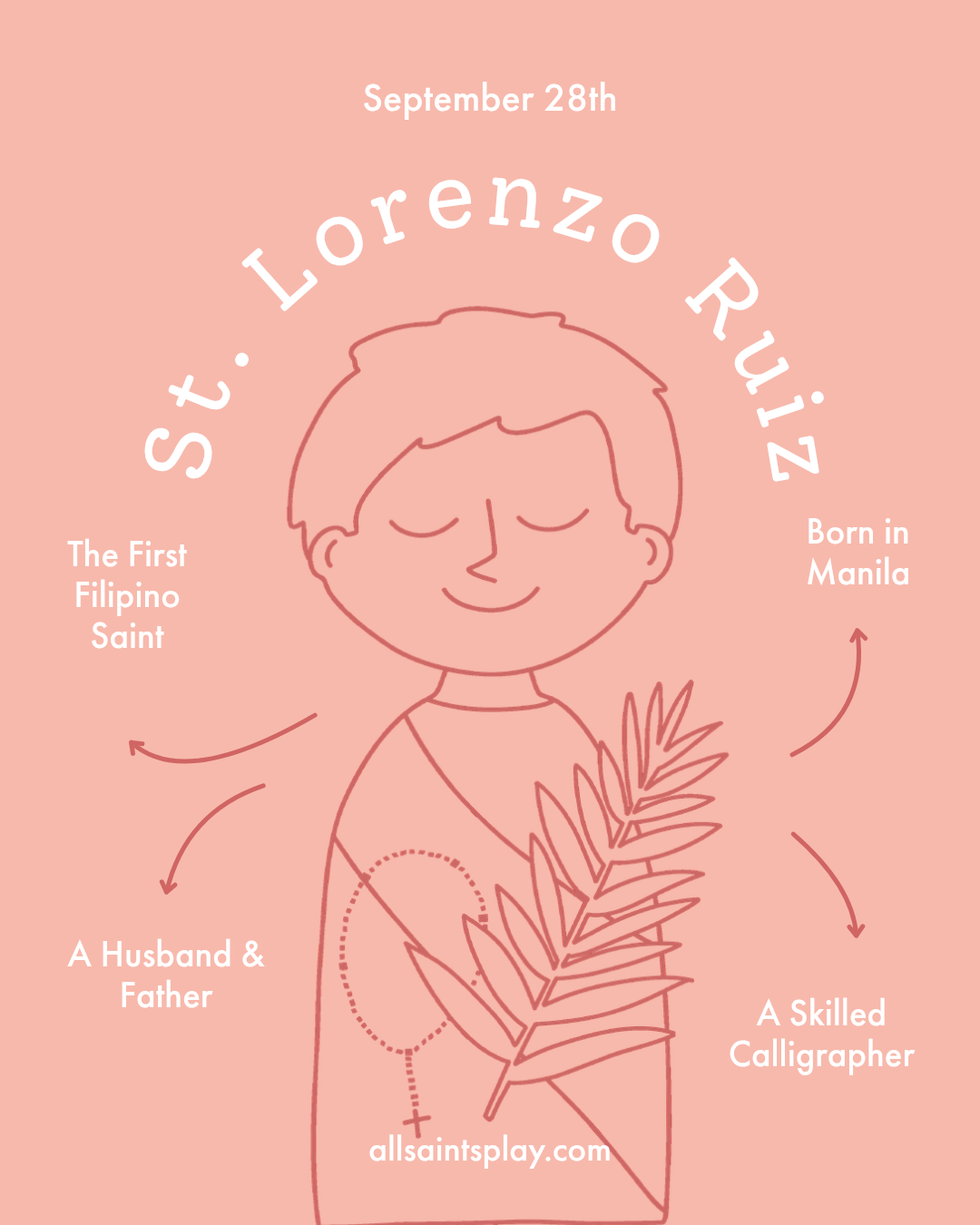
September 28: St. Lorenzo Ruiz
Fun Facts:
-
St. Lorenzo was from the Philippines.
-
He was good at writing and helped in his church.
-
He’s the first Filipino saint.
Ways to Celebrate:
-
Practice your handwriting, like Lorenzo did.
-
Learn about the Philippines.
-
Make a Filipino dish with your family.
-
Say a prayer for people who are treated unfairly.
-
Draw a picture of St. Lorenzo.
His Story:
St. Lorenzo Ruiz was born in Manila in the Philippines around 1600. He was a husband and father who worked as a calligrapher, writing beautifully by hand, and he served faithfully at his parish church. While traveling as a missionary, he and his companions were arrested for their faith in Japan, where being Christian was forbidden. Even when his life was threatened, Lorenzo refused to give up Jesus, saying he would die a thousand times for God. He became the first saint from the Philippines and is a hero of courage and faith.
What Kids Can Learn from St. Lorenzo Ruiz:
Staying true to Jesus is worth everything. St. Lorenzo shows us that an ordinary family man can be brave and holy.
A Little Prayer:
St. Lorenzo Ruiz, you loved Jesus more than your own life. Help our family to be brave in our faith and to stay close to God no matter what. St. Lorenzo, pray for us. Amen.
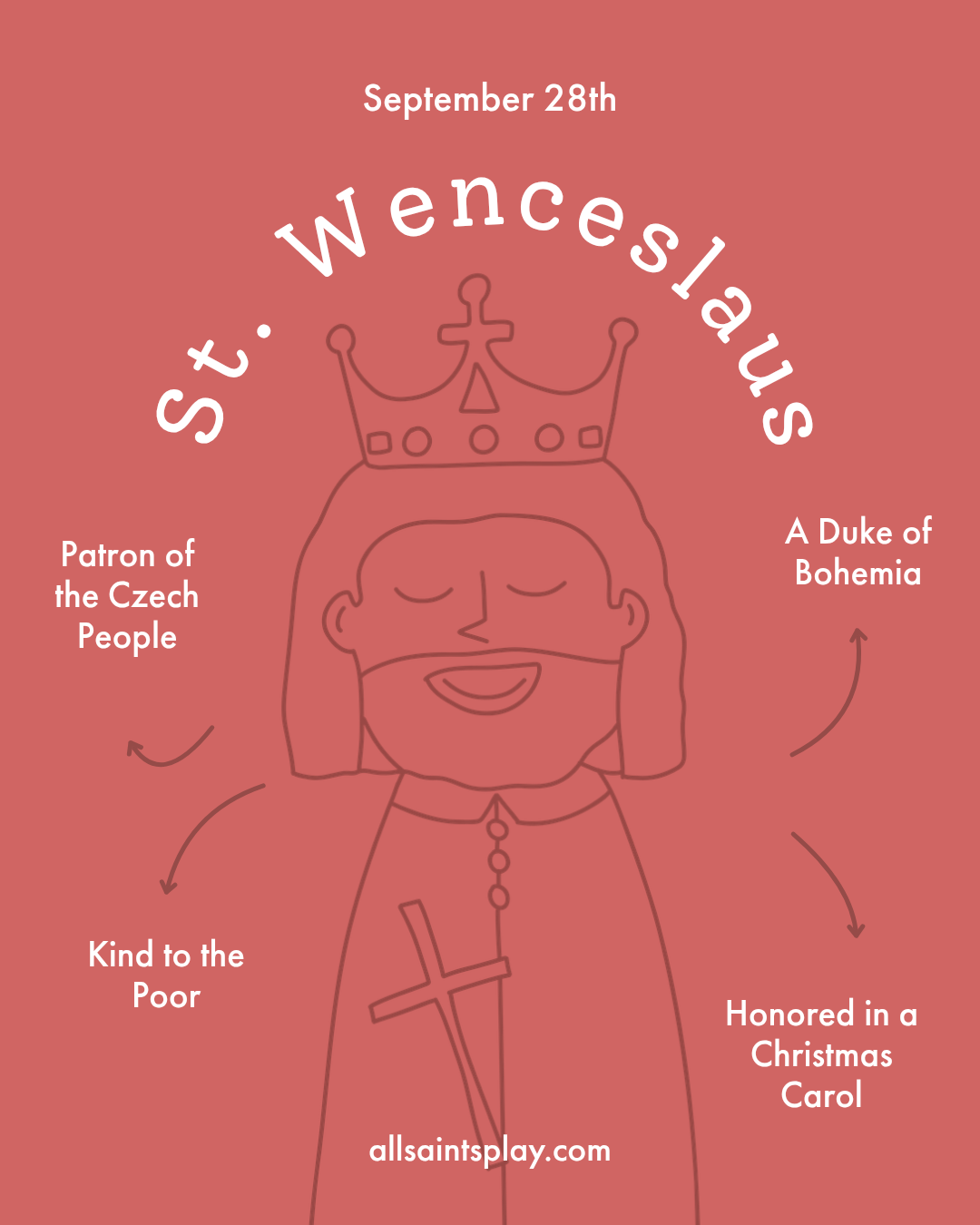
September 28: St. Wenceslaus
Fun Facts:
-
St. Wenceslaus was a king in Bohemia (now part of the Czech Republic).
-
He was known for being very kind to the poor.
-
There’s a famous Christmas carol about him called “Good King Wenceslaus.”
Ways to Celebrate:
-
Listen to the song “Good King Wenceslaus.”
-
Make a paper crown to remember he was a king.
-
Do a kind deed for someone in need.
-
Learn about the Czech Republic.
-
Say a prayer for leaders to be kind like Wenceslaus.
His Story:
St. Wenceslaus was a duke who ruled Bohemia (part of today’s Czech Republic) in the 900s. Raised by his holy grandmother, St. Ludmila, he grew up loving God and his people. As a young ruler he was famous for his kindness—bringing food and firewood to the poor, especially in the cold of winter, and treating everyone with fairness. He was killed by his own brother because of his goodness and faith, and he is honored as a martyr and the patron of the Czech people. The carol “Good King Wenceslas” still sings of his generous heart.
What Kids Can Learn from St. Wenceslaus:
Real greatness means using what we have to help others. Even leaders are called to be kind, fair, and generous to those in need.
A Little Prayer:
St. Wenceslaus, you cared for the poor and ruled with a kind and fair heart. Help our family to be generous and to treat everyone with love. St. Wenceslaus, pray for us. Amen.
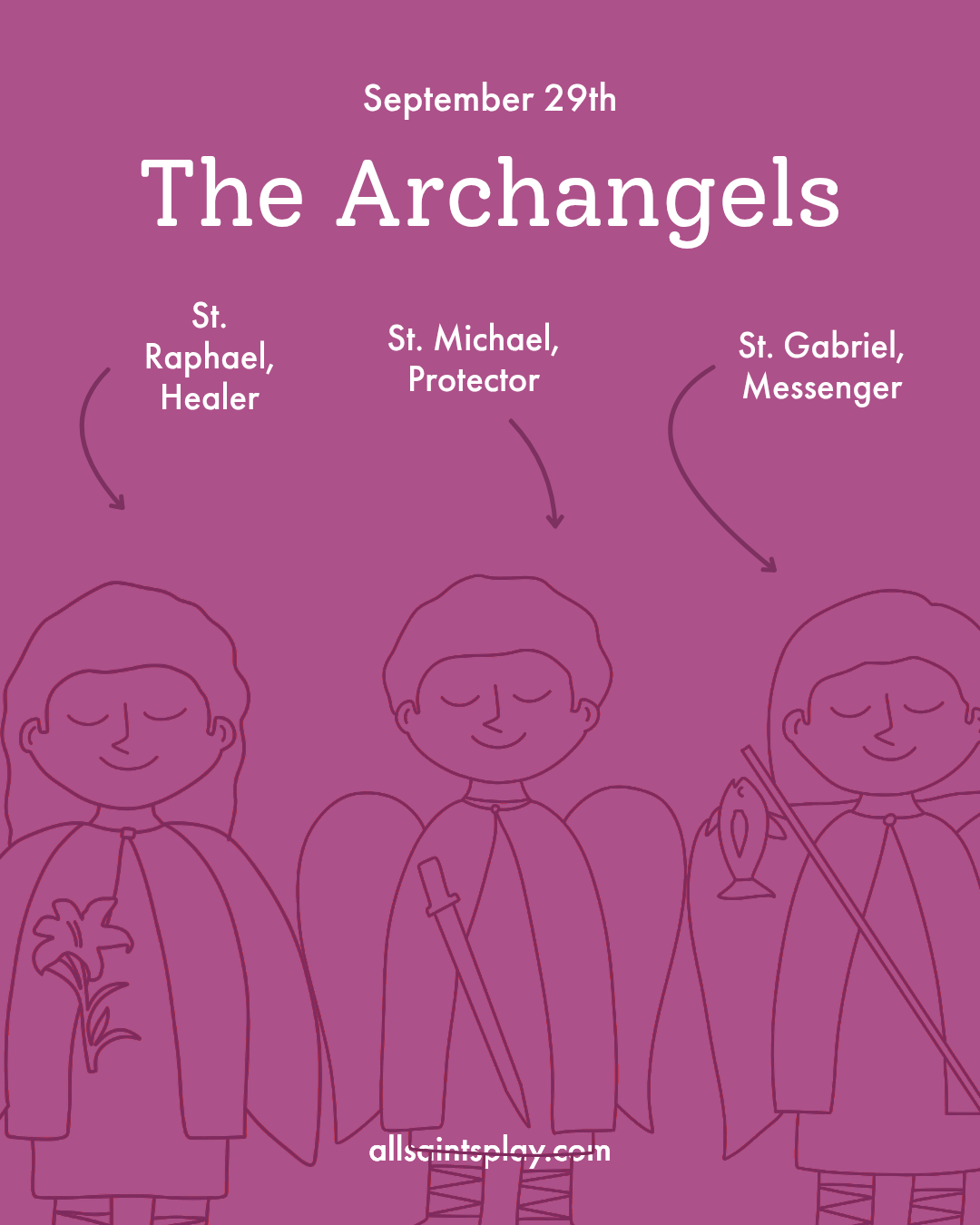
September 29: Sts. Michael, Gabriel & Raphael, the Archangels
Fun Facts:
-
The Church celebrates all three archangels together on September 29.
-
St. Michael’s name means “Who is like God?” He leads God’s army of angels.
-
St. Gabriel’s name means “God is my strength.” He told Mary she would be Jesus’ mother.
-
St. Raphael’s name means “God heals.” He appears in the Book of Tobit.
Ways to Celebrate:
-
Make angel crafts or a paper shield.
-
Learn and pray the St. Michael prayer together.
-
Act out Gabriel visiting Mary, or Raphael guiding Tobias.
-
Make a get-well card for someone who is sick.
-
Draw a picture of your favorite archangel.
Their Story:
On September 29, the Church honors the three great archangels named in the Bible—Michael, Gabriel, and Raphael—who stand before God and carry out His work. St. Michael is the mighty leader of God’s angels; the Bible describes him fighting against Satan and casting evil out of Heaven, and Christians have prayed to him for protection for hundreds of years. St. Gabriel is God’s messenger; he announced the birth of St. John the Baptist and, most wonderfully of all, appeared to Mary to tell her she would be the mother of Jesus. St. Raphael is the angel of healing; in the Book of Tobit he walks beside a young man named Tobias—guiding him safely, helping him find a good wife, and healing his father’s blindness. Together the archangels remind us that God is always watching over us—protecting, guiding, and healing.
What Kids Can Learn from the Archangels:
God is more powerful than anything bad, and He sends His angels to help us. Like Mary, we can answer God with a trusting “yes,” and we can always ask the archangels to protect us, guide us, and pray for those who are sick.
A Little Prayer:
Sts. Michael, Gabriel, and Raphael, you serve God with all your might. Michael, defend our family; Gabriel, help us listen to God’s word; Raphael, watch over those who are sick and traveling. Holy Archangels, pray for us. Amen.
More Monthly Feast Day Guides
Looking ahead to the coming months? Explore more of our monthly feast day guides for Catholic families:
-
October Feast Days — St. Thérèse of Lisieux, St. Francis of Assisi, St. Jude Thaddeus & more.
-
November Feast Days — St. Charles Borromeo, St. Cecilia, St. Andrew & more.
-
December Feast Days — St. Nicholas, Our Lady of Guadalupe, St. Lucy & more.
Want to build your own family rhythms around the liturgical year? Start with Create Feast Day Traditions Based on Your Love Languages and Liturgical Living Made Simple.
Make September’s feasts simple—with free printables ✨
You don’t need to plan it all from scratch. Join the free Catholic Creativity Corner for instant access to saint coloring pages, crafts, and feast day activities designed for Catholic families and communities—ready whenever you are.