January Feast Days (St. Elizabeth Ann Seton, St. Agnes, St. Thomas Aquinas + More)
Dec 28, 2024January is a fresh, hope-filled start to the year, and the Church fills it with the sweetness of the Holy Name of Jesus, the month’s devotion, along with St. Elizabeth Ann Seton, St. Agnes, St. Thomas Aquinas, and St. Ulphia. As the new year begins, these feast days are a simple, joyful way to keep Christ at the center of your family’s days.
🎨 Start the new year with the saints!
Celebrate the saints the easy way. Our free Catholic Creativity Corner is full of ready-to-print saint activities, coloring pages, and feast day crafts for your family, homeschool, or parish group. Sign up once for instant access, plus new free printables every month.
Monthly Overview
Tap any feast below to jump straight to it. ↓
Monthly Devotion: The Holy Name of Jesus
Key Feast Days & Saint Celebrations:
January 4: St. Elizabeth Ann Seton
January 21: St. Agnes of Rome
January 28: St. Thomas Aquinas
January 31: St. Ulphia
About the Monthly Devotion: The Holy Name of Jesus
January is dedicated to the Holy Name of Jesus—the name that means “God saves.” From the earliest days of the Church, Christians have treasured the name of Jesus, believing it carries the power and love of God Himself. Simply saying His name with reverence is a prayer. As we begin a new year, this devotion invites us to keep Jesus at the very center of our family life.
Family Ideas for January:
Teach little ones to bow their heads gently or pause when they hear the name of Jesus.
Pray a short prayer often: “Jesus, I love You. Jesus, I trust in You.”
Write and decorate the name “Jesus” and display it in your home.
Pray the Litany of the Holy Name together, even just a few lines.
Bring the January devotion into your mornings. Our Catholic Morning Menu features a beautiful cover and tracing page for each month’s traditional devotion—including January’s devotion to the Holy Name of Jesus—plus prayers, a Bible memory verse, the liturgical season, and gentle preschool learning to start each day with the faith. See the Morning Menu →
January 4: St. Elizabeth Ann Seton
Fun Facts:
She was the first American-born saint.
She founded the Sisters of Charity and the first free Catholic school in America.
She converted to Catholicism after the death of her husband.
Ways to Celebrate:
Write thank-you notes to teachers in honor of her love of Catholic education.
Learn about the history of Catholic schools.
Read a children’s book about her life.
Make a paper bonnet craft to symbolize her time period.
Pray for Catholic schools and their students.
Her Story:
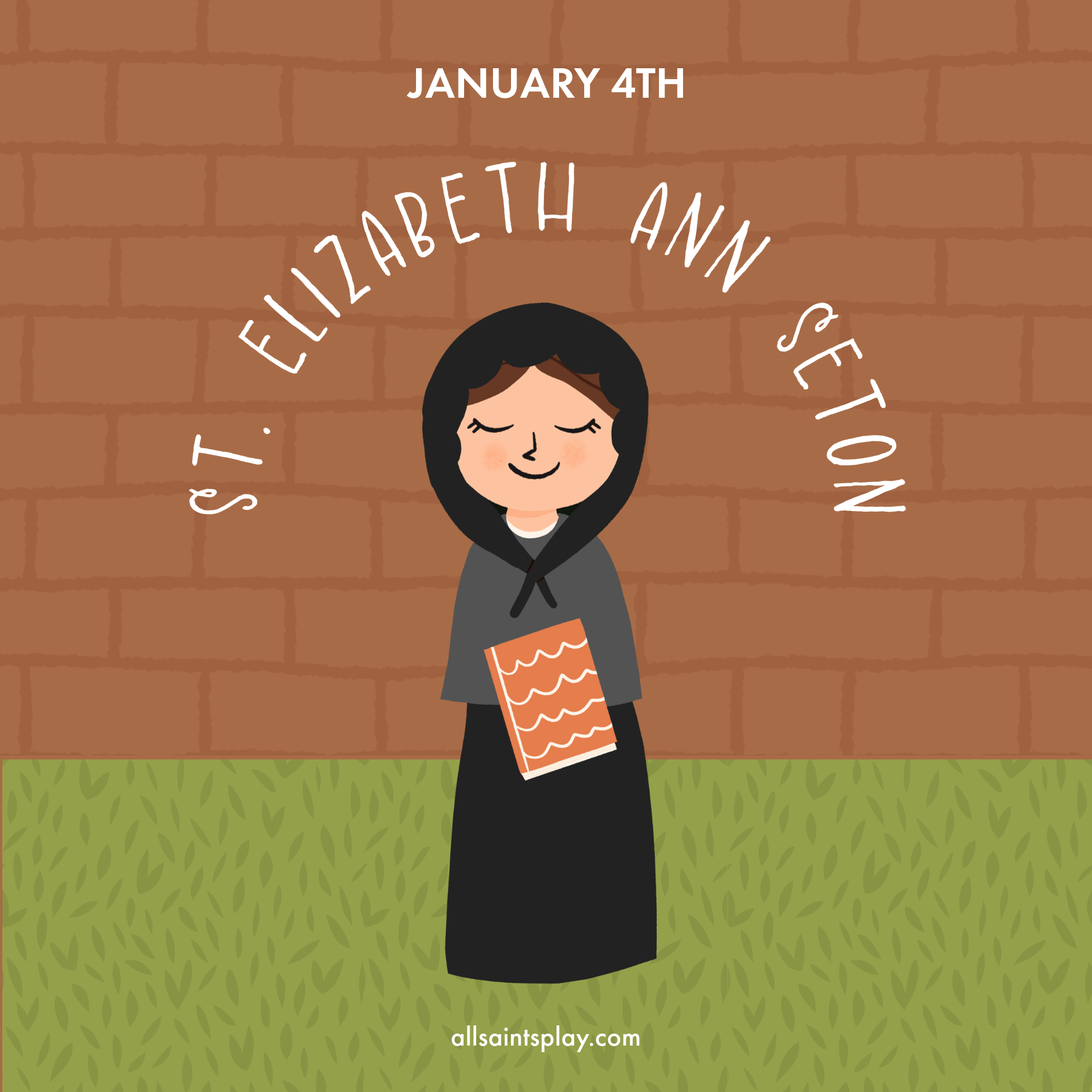
St. Elizabeth Ann Seton was born in New York City in 1774 into a wealthy Anglican family. She married William Seton and had five children, but after her husband’s death she found her way to the Catholic faith—a decision that brought her social and financial hardship. Trusting God through it all, she founded the Sisters of Charity and the first free Catholic school in the United States, opening the door for Catholic education in America. Her life is a beautiful example of trusting God’s plan, even through trials.
What Kids Can Learn from St. Elizabeth Ann Seton:
God has a plan for us even when life is hard. Like St. Elizabeth, we can trust Him through difficult times and use our gifts to help others—especially by teaching and caring for children.
A Little Prayer:
St. Elizabeth Ann Seton, you trusted God through joy and sorrow and gave your life to teaching children about Him. Help our family to trust God’s plan and to serve others with love. St. Elizabeth Ann Seton, pray for us. Amen.
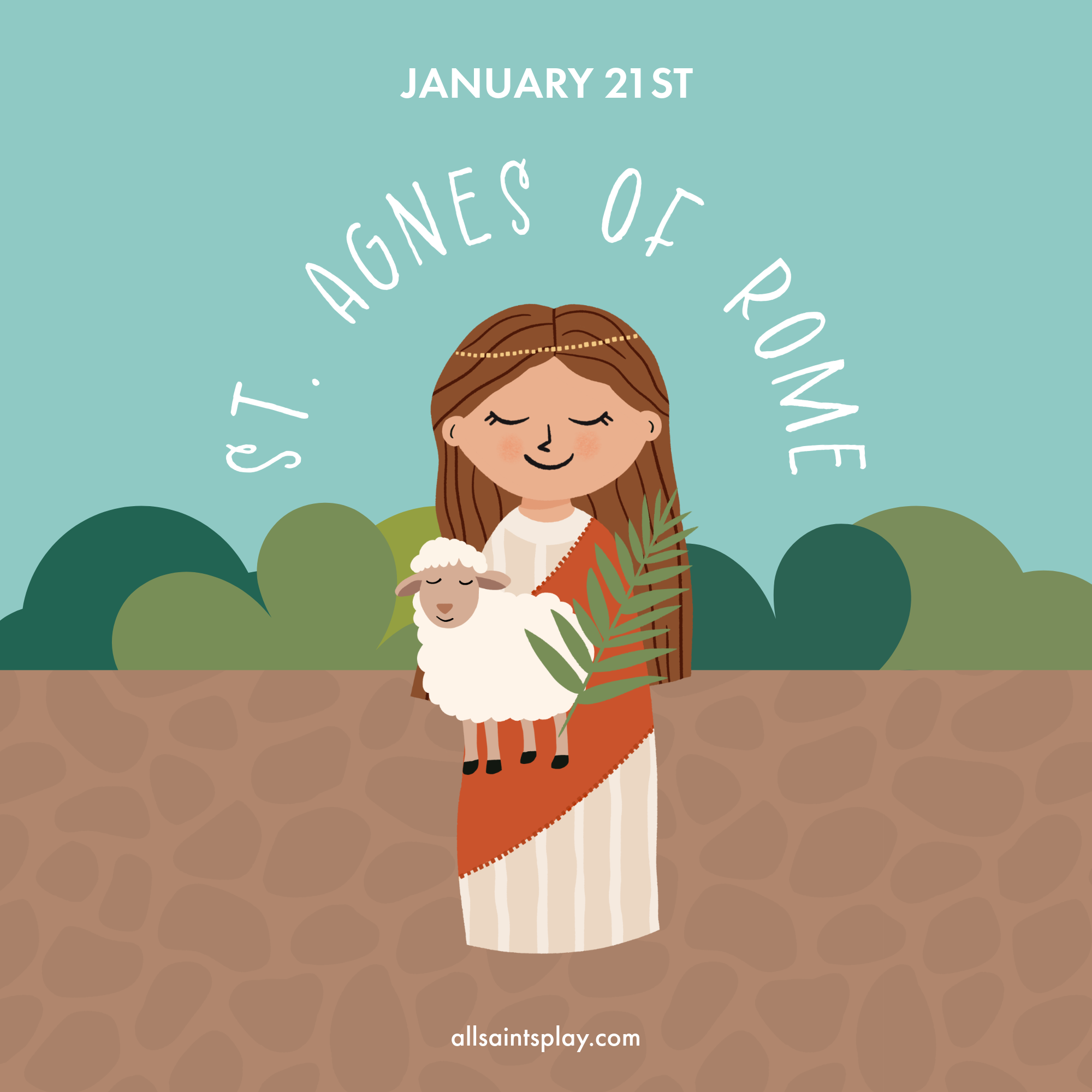
January 21: St. Agnes of Rome
Fun Facts:
St. Agnes was only about 12 years old when she was martyred.
Her name means “lamb,” a symbol of her purity and innocence.
She is often shown holding a lamb, representing her devotion to Christ.
Ways to Celebrate:
Make a lamb craft in her honor.
Read her story and talk about her bravery.
Bake lamb-shaped cookies or treats.
Pray for purity and courage in your family.
Light a candle and reflect on her faith.
Her Story:
St. Agnes lived in the early days of the Church, when Christians faced fierce persecution. She was known for her beauty, and many wished to marry her, but she had given her whole heart and her life to Christ. When she refused to give up her faith, she was martyred while still very young. Her courage and steadfast love for Jesus made her one of the most beloved saints of all time, especially among young people. She reminds us of the power of faith, even in the hardest trials.
What Kids Can Learn from St. Agnes:
Even the young can be brave and faithful. St. Agnes loved Jesus more than anything and stayed true to Him, showing us that God gives courage to those who trust Him.
A Little Prayer:
St. Agnes, you were young but so brave, and you gave your whole heart to Jesus. Help our family to be pure, courageous, and faithful, no matter what. St. Agnes, pray for us. Amen.
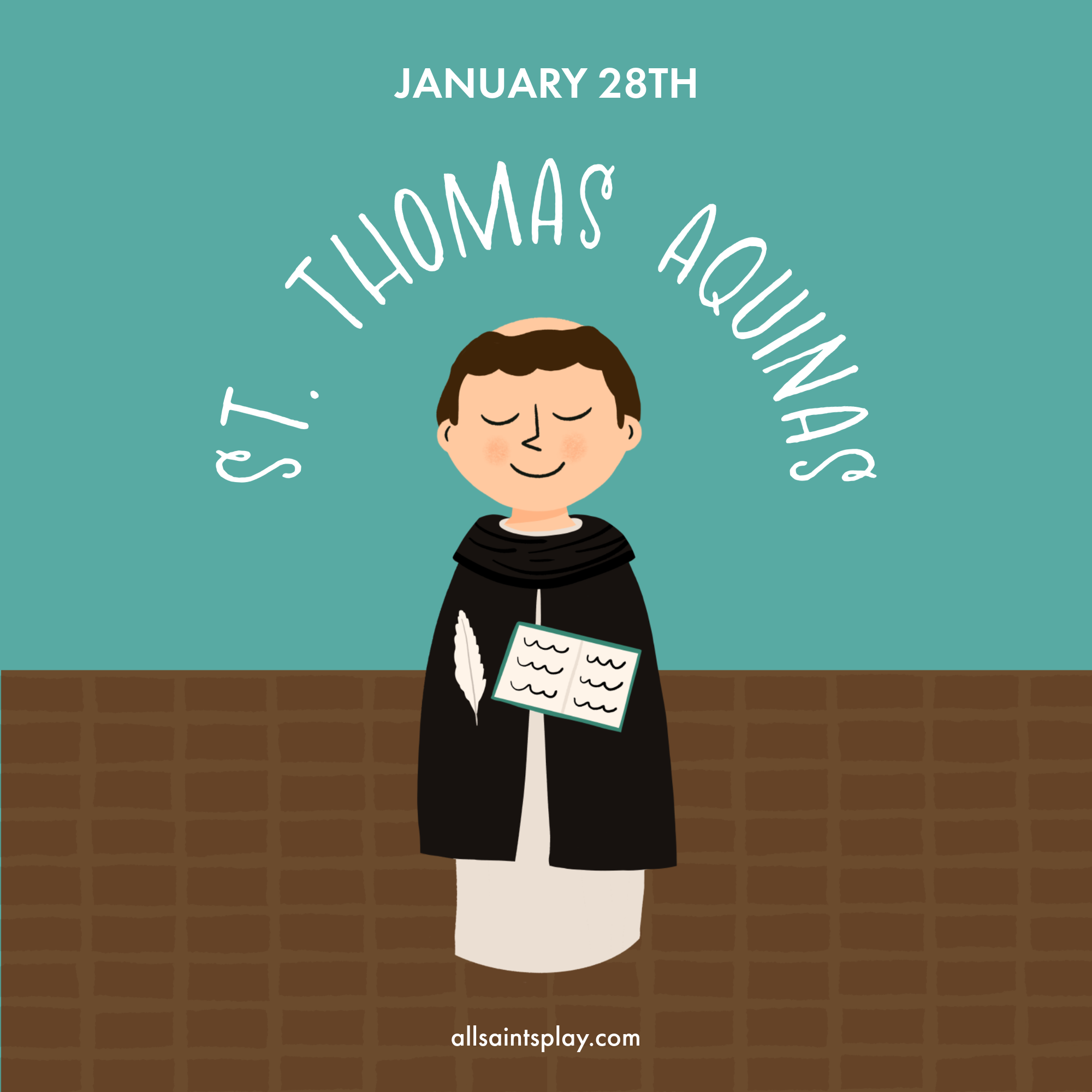
January 28: St. Thomas Aquinas
Fun Facts:
He is one of the greatest theologians in Church history.
He wrote the Summa Theologica, a great guide to the faith.
He is a Doctor of the Church, honored for his wisdom.
Ways to Celebrate:
Read a short quote from his writings and talk about what it means.
Make a craft featuring a sun or a light to symbolize wisdom.
Learn a simple prayer, like the “Tantum Ergo,” written by St. Thomas.
Have a family conversation about faith and reason.
Pray for wisdom and understanding in your family.
His Story:
St. Thomas Aquinas was born in Italy in 1225 and became a Dominican friar and a brilliant theologian. His family opposed his vocation, but he followed God’s call and devoted his life to teaching and writing about the faith. His great work, the Summa Theologica, beautifully weaves together reason and revelation, and remains one of the Church’s most treasured books. Yet for all his learning, St. Thomas was humble and prayerful, spending long hours before Jesus in the Eucharist. He shows us that faith and reason are friends, both leading us to God.
What Kids Can Learn from St. Thomas Aquinas:
Faith and reason go together. God gave us minds to know Him and hearts to love Him. Like St. Thomas, we can grow in wisdom by praying and by seeking the truth.
A Little Prayer:
St. Thomas Aquinas, you used your great mind to love and serve God. Help our family to grow in wisdom, to ask good questions, and to seek the truth that leads us to Jesus. St. Thomas Aquinas, pray for us. Amen.

January 31: St. Ulphia
Fun Facts:
St. Ulphia lived in France during the 8th century.
She was a hermit, known for her devotion to prayer and service.
Her life was marked by humility and simplicity.
Ways to Celebrate:
Learn about her life and the beauty of quiet devotion.
Spend a few moments in silent prayer as a family.
Make a simple craft, like a paper dove, to symbolize peace and humility.
Read about hermit saints and their unique way of life.
Pray for those who dedicate their lives to prayer and solitude.
Her Story:
St. Ulphia was a French hermit who lived in the 8th century, giving her life to prayer and quiet contemplation. She served others through her wisdom and her prayers for them. Known for her simplicity and humility, St. Ulphia reminds us of the beauty of a hidden, faith-filled life focused entirely on God. Though few details of her life remain, her witness invites us to make room for silence with Christ and to serve others with a generous heart.
What Kids Can Learn from St. Ulphia:
A quiet life of prayer is beautiful and powerful. Like St. Ulphia, we can grow close to God in silence and simple faithfulness, even when no one is watching.
A Little Prayer:
St. Ulphia, you loved God in quiet and simple ways. Help our family to make time for prayer, to enjoy peaceful moments with God, and to serve others with humble hearts. St. Ulphia, pray for us. Amen.
More Monthly Feast Day Guides
Looking ahead or catching up? Explore more of our monthly feast day guides for Catholic families:
December Feast Days — St. Nicholas, Our Lady of Guadalupe, St. Lucy & more.
February Feast Days — Our Lady of Lourdes, St. Josephine Bakhita, St. Scholastica & more.
Want to build your own family rhythms around the liturgical year? Start with Create Feast Day Traditions Based on Your Love Languages and Liturgical Living Made Simple.
Make January’s feasts simple—with free printables ✨
You don’t need to plan it all from scratch. Join the free Catholic Creativity Corner for instant access to saint coloring pages, crafts, and feast day activities designed for Catholic families and communities—ready whenever you are.