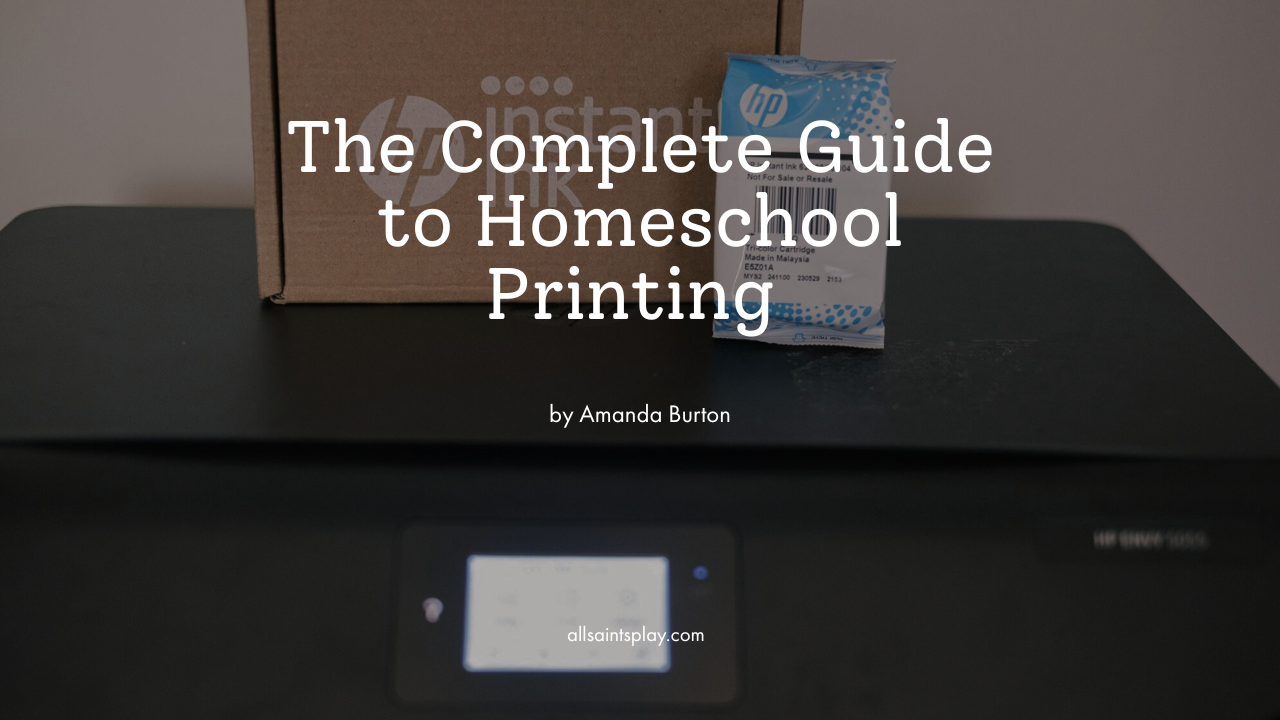
The Complete Guide to Homeschool Printing + Best Printers & Paper
Feb 11, 2026If you homeschool, you print.
Not always everything. Not every day. But sooner or later, you’ll find yourself staring at a PDF curriculum, a stack of worksheets, or a set of flashcards and thinking:
How on earth do people afford to print all of this?
Because homeschool printables are genuinely one of the best tools modern families have. They’re flexible. They’re affordable compared to many boxed curriculums. They make it easy to teach multiple ages. And they let you build a homeschool that fits your child, your schedule, and your season.
The only catch is that printing has a learning curve at first—especially when you’re trying to figure out printers, ink, paper, and what’s actually worth printing.
The good news is this: once you have a simple setup that works for your family, printables become one of the easiest and most practical parts of homeschooling. You stop reinventing the wheel. You stop spending money on materials you don’t need. And you can print what matters most—then reuse it again and again.
If you’ve been trying to figure out the best printer for homeschooling, the cheapest way to print homeschool curriculum, what paper to use, how to bind your printables, or even how to go digital instead of printing… you’re in the right place.
This is the complete guide.
Step One: How Much Do You Actually Print?
Before we talk about printers, it helps to identify what kind of “printing family” you are. Because the best homeschool printer for one family might be a waste of money for another.
Light Printing Families
You print:
-
10–20 pages per week
-
a few worksheets
-
occasional coloring pages
-
maybe a morning menu or checklist
You probably don’t print full curriculum sets all at once. You may prefer doing some things digitally and printing only what needs to be hands-on.
Moderate Printing Families
You print:
-
50–100 pages per week
-
preschool or early elementary printables
-
seasonal activities
-
handwriting sheets
-
some games, cards, and crafts
This is the most common category for families using printables consistently.
Heavy Printing Families
You print:
-
full curriculum PDFs
-
large sets of flashcards and manipulatives
-
materials for multiple children
-
liturgical units, extras, and enrichment
If you’re printing full curriculum regularly, you may be printing 5,000+ pages per year without even realizing it.
Once you know which category you’re in, choosing the right printer becomes much easier.
Best Printers for Homeschooling (At-Home Options Compared)
If you want the simplest day-to-day experience, printing at home is usually the best option. The key is choosing the right type of printer for your family.
The three most common options homeschooling families consider are:
-
HP Instant Ink printers
-
Epson EcoTank printers
-
Laser printers
Let’s compare them.
HP Instant Ink: The Best Option for Predictable Monthly Printing
Best for: families who print consistently and want a steady monthly cost.
HP Instant Ink is one of the most popular printing solutions in the homeschool world. Instead of buying ink cartridges whenever you run out, you pay for a monthly plan based on how many pages you print.
Here’s how it works:
-
You pay a monthly plan based on page count
-
HP automatically ships ink before you run out
-
Color pages count the same as black-and-white pages
-
You can upgrade, downgrade, or cancel anytime
This is why you’ll see parents searching:
-
HP Instant Ink homeschool
-
HP Instant Ink worth it
-
best printer for printables
Because if you print a lot of colorful preschool materials, HP Instant Ink can be extremely cost-effective.
For example:
A 700-page plan is often around $25/month, which means if you print a 600-page curriculum in one month, you can often do it for about $25 instead of buying expensive cartridges.
Why homeschool moms love it
-
predictable costs
-
no emergency store runs
-
great for color-heavy pages
-
low upfront printer cost
The main downside
It’s a subscription, and some families don’t want another monthly bill (which is completely understandable).
Where to find good HP printer sales
If you want to try this route, watch for printer sales at:
-
Walmart
-
Target
-
Costco
-
Sam’s Club
-
Back-to-school sales
-
Black Friday
Many families snag HP printers under $70 during promotions.
Epson EcoTank: The Lowest Long-Term Cost for Heavy Printing Families
Best for: families printing high volumes who want the cheapest cost per page over time.
If you’ve been researching the best printer for homeschooling, you’ve probably seen Epson EcoTank mentioned constantly.
EcoTank printers cost more upfront (often $250–$400), but they don’t use cartridges. They use refillable ink tanks. Instead of constantly buying cartridges, you refill ink bottles when needed.
This is why so many parents search:
-
Epson EcoTank homeschool printer
-
EcoTank vs HP Instant Ink
-
is Epson EcoTank worth it
Because once you start printing a lot, EcoTank often becomes the cheapest option long-term.
Many homeschool families only refill ink about once a year, depending on usage.
Why EcoTank is amazing
-
extremely low long-term cost per page
-
no subscription
-
great color quality
-
ideal for printing entire curriculum sets
The downside
The upfront cost is higher, so it’s not always the best choice if you’re in a tight budget season.
Where to watch for EcoTank deals
-
Costco
-
Sam’s Club
-
Amazon Prime Days
-
Back-to-school promotions
If you plan to homeschool for multiple years and print regularly, EcoTank often becomes the most economical choice.
Laser Printers: The Best Printer for Black-and-White Worksheets
Best for: families printing mostly text-based worksheets.
Laser printers don’t use liquid ink. They use toner. Toner lasts a long time and prints very quickly.
This is why you’ll see parents searching:
-
best laser printer for homeschool
-
laser vs inkjet for homeschool
-
toner vs ink cost
Laser printers are often ideal for:
-
math worksheets
-
handwriting sheets
-
copywork
-
reading logs
-
lesson plans
Strengths of laser printing
-
fast printing
-
crisp, clean text
-
toner lasts a long time
-
great for high-volume black-and-white printing
Limitations
-
color laser printers are expensive
-
not ideal for preschool printables that rely on color, crafts, or visuals
If your homeschool is mostly worksheet-based, a laser printer can be an excellent long-term investment.
Quick Printer Decision Guide
If you want the simplest answer:
-
Print mostly color → HP Instant Ink or Epson EcoTank
-
Print mostly black-and-white → Laser printer
-
Print occasionally → Library, Staples, or digital
Cheapest Ways to Print Homeschool Curriculum (Without Buying a Printer)
Printables don’t have to mean owning a printer. One of the best things about printable curriculum is that you can use it in whatever way fits your season—printing at home, printing at the library, outsourcing a big job, or even using a tablet.
If you’re searching for the cheapest way to print homeschool curriculum, these are the main alternatives.
Staples, UPS Store, and Office Chains
Best for: last-minute printing or small batches.
These stores are convenient and fast. Many offer same-day turnaround. If you suddenly need 30 pages printed for tomorrow, they can be a lifesaver.
The downside is cost—especially for color.
Printing an entire curriculum in color at a chain store can get expensive quickly. This option works best when you’re printing:
-
a small packet
-
a single week
-
a one-time project
-
a few pages you need immediately
Money-saving tip
Some locations allow you to bring your own paper, which can reduce the cost.
Local Libraries
Best for: families printing a little at a time.
Libraries are often one of the best options if you:
-
print weekly instead of all at once
-
don’t need large color sets
-
want low-cost black-and-white printing
Many libraries charge low rates per page, and some offer monthly free print allowances.
If you’re printing homeschool worksheets in small batches, the library is a very realistic solution—and it’s also a great way to use printables without committing to buying a printer right away.
Boutique Printing Companies (Like Watson Family Press)
Best for: families who want full curriculum sets professionally printed.
Small homeschool-friendly printing companies are an underrated option. They’re often:
-
more affordable than Staples for large jobs
-
higher quality
-
better suited for binding
This is a great option if you’re planning ahead and want a polished finished product.
The tradeoff is time—you’ll need to plan for shipping and fulfillment. But for many families, outsourcing one large print job is worth it for the convenience and the finished result.
Smart Printing Settings to Save Ink (This Matters More Than You Think)
If you want to save money long-term, the printer you choose matters… but your printing settings matter too.
These strategies are simple, but they make a noticeable difference.
Use Grayscale When Color Isn’t Necessary
Not everything needs to be printed in full color.
Many families print these in grayscale:
-
math worksheets
-
handwriting practice
-
reading pages
-
simple checklists
And save color printing for:
-
flashcards
-
saint pages
-
crafts
-
games
This keeps your ink costs manageable while still letting you print the pages where color actually supports learning.
Print Covers in Color, Pages in Black-and-White
If you love a beautiful curriculum look but don’t want to pay for color ink, this is a great compromise.
A simple color cover can make a unit feel special, while the day-to-day worksheets can be printed in black and white.
Double-Sided Printing for Worksheets
If your printer supports duplex printing, use it for:
-
math
-
handwriting
-
simple worksheets
This cuts paper use in half and reduces the size of your binders.
Printables Are Meant to Be Flexible (Print Only What You Need)
One of the biggest strengths of printables is that you are not locked into doing every page.
Many families print:
-
the hands-on activities
-
the games
-
the pages their child will actually enjoy
And skip the rest.
This isn’t “doing less.” It’s using printables the way they were designed: to support your child’s learning without forcing you into a one-size-fits-all plan.
Paper Matters: What Paper to Use for Homeschool Printables
Paper is one of those things that feels boring… until you realize it makes a huge difference.
The right paper can:
-
reduce ink bleed
-
make printables feel sturdier
-
make activities last longer
-
improve the overall experience
And the best part is: you don’t need fancy paper for everything. You just need the right paper for the right job.
20 lb Paper vs 24 lb Paper
-
20 lb: cheapest, fine for most worksheets
-
24 lb: thicker, better for color-heavy pages and durability
If you print mostly worksheets, 20 lb paper is completely fine.
If you print a lot of colorful preschool curriculum, 24 lb often feels nicer and holds up better.
Cardstock: The Best Upgrade for Flashcards and Games
Cardstock is worth it for:
-
matching cards
-
saint cards
-
puzzles
-
flashcards
-
cut-and-play activities
A good beginner option is 65 lb cardstock.
If you want sturdier cards, 80 lb is a great upgrade.
Cardstock is one of the best ways to make printables last longer—especially if you’re planning to reuse them with younger siblings later.
Specialty Paper (Optional)
These are not necessary, but some families love them:
-
sticker paper (for reward charts or labels)
-
colored paper (for cutting activities)
-
matte photo paper (rare, but nice for keepsakes)
If you’re trying to keep things simple, consider these “nice-to-have” extras, not essentials.
Where to Buy Paper Cheap
Paper is often cheapest during:
-
back-to-school season
-
bulk warehouse deals
Good places to check:
-
Costco
-
Sam’s Club
-
Walmart
-
Amazon bulk
-
Target back-to-school sales
Optional Tools to Elevate Printables (Nice to Have, Not Required)
None of these tools are required. But if you use printables often, these are the tools that make everything feel easier and more durable.
They also make printables feel more like “real materials,” which is one reason so many families love them.
Laminators (For Reusable Pages)
Laminating is worth it if you use:
-
morning menus
-
reusable tracing sheets
-
matching games
-
flashcards
-
seasonal activities you want to reuse yearly
A quick laminating tip:
-
3 mil pouches are flexible and great for worksheets
-
5 mil pouches are sturdier and better for cards
You can also use dry-erase markers on laminated pages. If you have young kids who smudge, wet-erase markers are often easier.
If you don’t want to laminate everything, you can also use page protectors or dry-erase sleeves for your most-used pages.
Corner Rounders
A corner rounder makes printable cards look more polished and prevents sharp corners (especially helpful for little hands).
Great for:
-
flashcards
-
saint cards
-
matching games
This is one of those tools that sounds unnecessary until you use it once—and then you wonder why you waited.
Decorative Edge Scissors
These are the wavy-edged scissors that instantly make crafts look more finished.
They’re great for:
-
borders
-
labels
-
little booklets
-
saint cards
They’re also a fun “small upgrade” if you want your homeschool materials to feel a little more special without adding extra work.
Paper Trimmer
If you cut cards weekly, a paper trimmer saves time and keeps edges neat.
If you cut occasionally, scissors are fine. But if you print a lot, a paper trimmer is a sanity-saver.
Binding Options: How to Turn Printables Into Real Curriculum
If you’ve ever printed a full curriculum and ended up with a messy stack of paper, you already know: binding matters.
The right binding system makes printables easier to use, easier to store, and easier to come back to later.
Disc-Bound Binding (All Saints Play’s Preferred Method)
Disc-bound binding is my favorite method for printable curriculum.
It’s:
-
flexible
-
easy to rearrange
-
easy to add or remove pages
-
lays flat
-
less bulky than a 3-ring binder
It’s perfect for homeschool printables because you can:
-
print what you need
-
punch it
-
add it in
-
remove pages later
This is one of the best systems if you want your printables to feel like a real curriculum without being locked into a permanent format.
3-Ring Binders
Binders are the simplest option because:
-
they’re cheap
-
easy to find
-
require no special tools
The downside is they can get bulky fast, and pages can tear more easily.
That said, binders are still a great option—especially for families just starting out or printing only small amounts.
Coil Binding
Coil binding is:
-
professional
-
durable
-
flat-laying
It’s best for:
-
full-year curriculum sets
-
materials you won’t rearrange
This is often done through a print shop or boutique printing service.
Page Protectors and Dry-Erase Sleeves
These are a great alternative to laminating everything.
Use them for:
-
reusable worksheets
-
tracing pages
-
morning menus
You can slide pages in and reuse them without permanently laminating.
Digital & Hybrid Options (Print Less, Save More)
If printing isn’t feasible right now, you can still use homeschool printables.
Digital options are growing in popularity, especially for families who want:
-
less paper clutter
-
lower ink costs
-
easy reuse
And the great thing is: digital doesn’t mean “all or nothing.”
Noteshelf 3 (Top Pick)
Noteshelf 3 is an excellent homeschool PDF app because:
-
it’s a one-time purchase
-
easy to import PDFs
-
handwriting tools feel natural
-
great for daily worksheets
If you want to use printables digitally without paying a subscription, Noteshelf 3 is one of the best options available.
Samsung Notes (Best Free Option for Samsung Families)
If you have a Samsung tablet, Samsung Notes is a great free option.
It includes:
-
PDF annotation
-
simple organization
-
stylus support
For many families, it’s all they need.
The Hybrid Method (Most Realistic for Many Families)
Many families do a mix:
-
print crafts and hands-on activities
-
complete worksheets digitally
-
laminate a few reusable favorites
This is often the most budget-friendly and least overwhelming approach.
Which Option Is Best for Your Family?
If you want the simplest answer:
-
Print often + want predictable costs → HP Instant Ink
-
Print a lot long-term → Epson EcoTank
-
Print mostly worksheets → Laser printer
-
Print occasionally → Library
-
Want a professional curriculum copy → Boutique printing
-
Want minimal paper → Digital or hybrid
Frequently Asked Questions About Homeschool Printing
What is the best printer for homeschooling?
The best printer for homeschooling depends on how much you print. For consistent color printing, HP Instant Ink and Epson EcoTank are the most popular options. For black-and-white worksheet printing, a laser printer is often the most cost-effective.
Is Epson EcoTank worth it for homeschool?
EcoTank is often worth it if you print large quantities regularly. The upfront cost is higher, but the long-term cost per page is usually much lower than cartridge printers.
Is HP Instant Ink cheaper than buying ink?
For many families, yes—especially if you print color-heavy pages. HP Instant Ink pricing is page-based, which makes color printing more affordable than buying cartridges.
What is the cheapest way to print homeschool curriculum?
The cheapest option depends on your volume. For small batches, the library is often the most affordable. For heavy printing, EcoTank can be the cheapest long-term. For occasional full curriculum printing, boutique printing services can be surprisingly cost-effective.
What paper should I use for homeschool printables?
For worksheets, standard 20 lb paper works fine. For sturdier printables and color-heavy pages, 24 lb paper is a great upgrade. For flashcards, games, and manipulatives, cardstock is worth it.
What is the best way to bind printable curriculum?
Disc-bound binding is one of the best options because it’s flexible and allows you to add and remove pages easily. 3-ring binders are the simplest option, and coil binding is best for permanent curriculum sets.
Can I homeschool without printing everything?
Absolutely. Many families use a hybrid method—printing hands-on pages and doing worksheets digitally using apps like Noteshelf 3 or Samsung Notes.
Printing is a tool.
It’s meant to support your homeschool, not become another stress point.
Start where you are.
Use what fits your season.
Upgrade slowly if and when it makes sense.
Printables are one of the best tools homeschool families have. They make it possible to bring beauty, structure, and hands-on learning into your home without needing a huge budget or a dedicated classroom.
Once you find a printing rhythm that works for you, printables become less of a hassle and more of a support.
And you don’t need a perfectly bound, color-coded, laminated setup to give your children a beautiful, faith-filled education. The most important work isn’t what comes out of the printer tray—it’s the learning and formation happening around your table.