February Feast Day Guide: Easy Traditions & Activities for Kids (Plus a Free Holy Family Printable!)
Jan 29, 2025February is a month of love, and the Church fills it with the warmth of the Holy Family, the month’s devotion, along with a company of brave and gentle saints. As we celebrate love and belonging, these feast days are a simple, joyful way to keep Christ at the center of your family’s home.
🎨 Want to make February’s feasts simple?
Celebrate the saints the easy way. Our free Catholic Creativity Corner is full of ready-to-print saint activities, coloring pages, and feast day crafts for your family, homeschool, or parish group. Sign up once for instant access, plus new free printables every month.
Monthly Overview
Tap any feast below to jump straight to it. ↓
Monthly Devotion: The Holy Family
Key Feast Days & Saint Celebrations:
February 6: St. Paul Miki & Companions
February 7: St. Richard of Chichester
February 8: St. Josephine Bakhita
February 10: St. Scholastica
February 11: Our Lady of Lourdes
February 25: St. Walburga
About the Monthly Devotion: The Holy Family
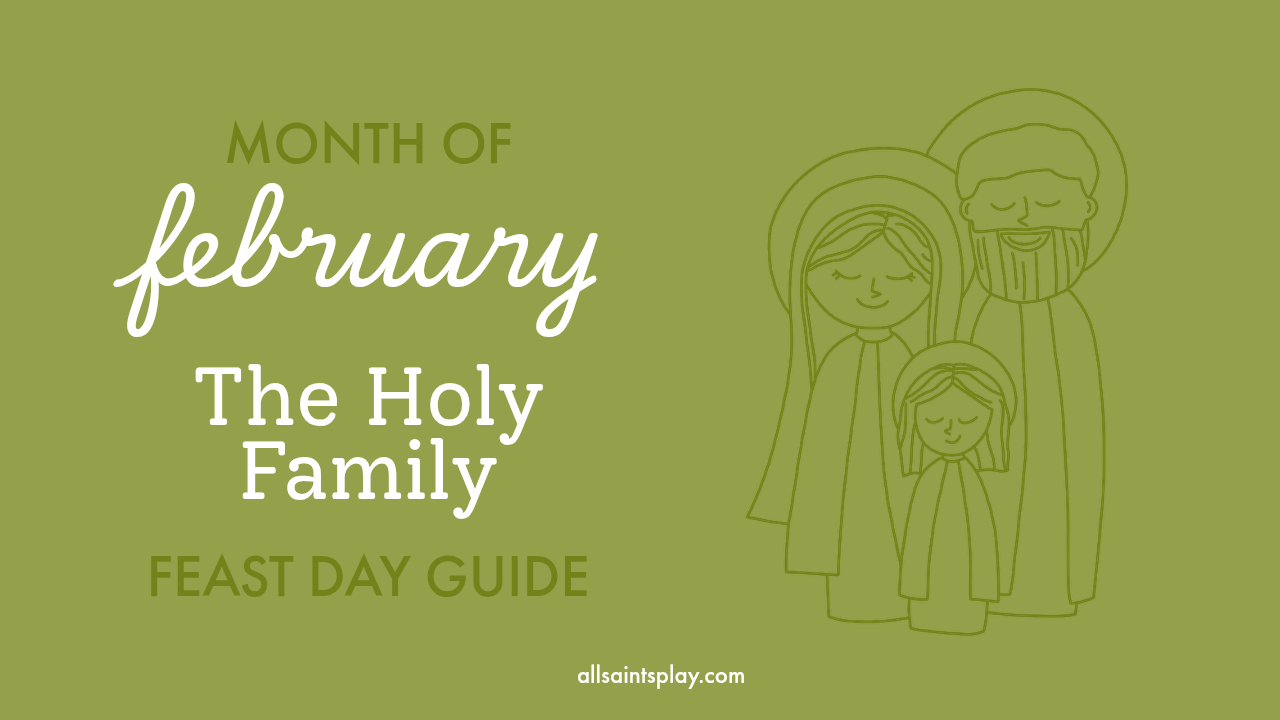
While the feast of the Holy Family is celebrated on the Sunday after Christmas, the whole month of February is dedicated to the Holy Family—Jesus, Mary, and Joseph—the model for every Catholic family. Their home in Nazareth was filled with love, obedience, and faithfulness, and it shows us how to build our own families on love of God and one another. February, so often linked with love, is a beautiful time to look to the Holy Family and ask them to bless our homes.
Family Ideas for February:
Display an image of the Holy Family in your home.
Pray a short prayer together: “Jesus, Mary, and Joseph, pray for our family.”
Talk about one way each person can show love and help at home this week.
Make a Holy Family craft or color a picture of Jesus, Mary, and Joseph.
Bring the February devotion into your mornings. Our Catholic Morning Menu features a beautiful cover and tracing page for each month’s traditional devotion—including February’s devotion to the Holy Family—plus prayers, a Bible memory verse, the liturgical season, and gentle preschool learning to start each day with the faith. See the Morning Menu →
February 6: St. Paul Miki & Companions
Fun Facts:
St. Paul Miki was a Jesuit seminarian and the first Japanese person to be canonized.
The martyrs were crucified on a hill overlooking Nagasaki, praying and singing as they died.
The group included three young boys who inspired many with their bravery.
Ways to Celebrate:
Read stories about these saints and talk about their courage.
Make a simple Japanese dish and talk about the Catholic faith in Japan.
Create paper crosses to honor the martyrs.
Pray a decade of the Rosary for persecuted Christians around the world.
Talk about being brave in sharing our faith.
Their Story:
St. Paul Miki was a young Japanese man studying to become a Jesuit priest at a time when being Christian was forbidden in Japan. In 1597, he and twenty-five companions—priests, lay people, and even three young boys—were arrested for their faith and crucified on a hill overlooking Nagasaki. As they died, they forgave those who harmed them and preached about the love of God. St. Paul Miki was the first person born in Japan to be named a saint, and the Martyrs of Nagasaki are remembered for their joyful courage.
What Kids Can Learn from St. Paul Miki:
Loving Jesus is worth everything, and courage can be found even in the young. Like St. Paul Miki, we can be brave, forgive those who hurt us, and stay faithful to God.
A Little Prayer:
St. Paul Miki and companions, you loved Jesus so much that you gave your lives for Him with joy. Help our family to be brave in our faith and to forgive others as you did. St. Paul Miki, pray for us. Amen.
February 7: St. Richard of Chichester
Fun Facts:
He is remembered for his humility and simplicity.
His shrine in Chichester Cathedral became a popular pilgrimage site.
A famous prayer—to know, love, and follow Jesus—comes from him.
Ways to Celebrate:
Pray St. Richard’s prayer together: to know Jesus more clearly, love Him more dearly, and follow Him more nearly.
Read about his life and talk about what it means to serve others.
Make a simple “book” craft symbolizing his love of learning and faith.
Light a candle and ask for his intercession.
Share stories about saints from England.
His Story:
St. Richard of Chichester was a 13th-century English bishop known for his humility, gentleness, and care for the poor. Though he came from a hardworking farming family and faced many hardships, he trusted God and served his people faithfully as a shepherd of souls. He is best remembered for a beautiful prayer asking to know Jesus more clearly, love Him more dearly, and follow Him more nearly—words still prayed by people all over the world today.
What Kids Can Learn from St. Richard:
Holiness grows through small, faithful, humble service. Like St. Richard, we can ask Jesus to help us know Him, love Him, and follow Him more closely each day.
A Little Prayer:
St. Richard, you asked to know, love, and follow Jesus more each day. Help our family to serve others humbly and to grow closer to Jesus. St. Richard, pray for us. Amen.
February 8: St. Josephine Bakhita
Fun Facts:
Her name, “Bakhita,” means “fortunate” in Arabic.
She forgave those who had hurt her and prayed for them.
She is the patron saint of Sudan and of survivors of human trafficking.
Ways to Celebrate:
Pray for people who are not free, and for those who help them.
Create a “forgiveness jar” to encourage acts of mercy at home.
Read a child-friendly book about her life.
Make a craft inspired by African culture to honor her heritage.
Thank God for the gift of freedom and for His constant love.
Her Story:
St. Josephine Bakhita was born in Sudan, and as a young girl she was kidnapped and sold into slavery, suffering greatly for many years. Eventually she was brought to Italy, where she came to know Jesus, was baptized, and was finally free. She became a Canossian sister—gentle, joyful, and beloved by all—and she forgave the people who had hurt her, even praying for them. Her name means “fortunate,” and she is honored today as the patron saint of Sudan and of all who have suffered from human trafficking.
What Kids Can Learn from St. Josephine Bakhita:
God’s love brings freedom and healing, and no suffering is ever wasted with Him. Like St. Josephine, we can forgive others and trust that God is always near, even in hard times.
A Little Prayer:
St. Josephine Bakhita, you suffered greatly but never stopped trusting in God’s love, and you forgave those who hurt you. Help our family to forgive, to hope, and to see every person as a child of God. St. Josephine, pray for us. Amen.
February 10: St. Scholastica
Fun Facts:
She was the twin sister of St. Benedict.
A famous story says her prayers brought a storm so her brother would stay longer.
She is the patron saint of storms.
Ways to Celebrate:
Talk about the importance of prayer and perseverance as a family.
Make a “storm jar” craft using water and glitter.
Learn a little about the Rule of St. Benedict and monastic life.
Bake bread as a nod to monastery life and share it with a neighbor.
Say a prayer for safety during storms.
Her Story:
St. Scholastica was the twin sister of St. Benedict, and like her brother she gave her whole life to God, founding a community of nuns. A beloved story tells how, during one of their yearly visits, she begged her brother to stay longer so they could keep talking about God—and when he refused, she prayed, and God sent a great storm that kept him from leaving! She loved God with her whole heart, and when she died, St. Benedict saw her soul rise to Heaven like a gentle dove.
What Kids Can Learn from St. Scholastica:
God listens to the prayers of those who love Him. Like St. Scholastica, we can pray with trust and treasure time spent talking about God with the people we love.
A Little Prayer:
St. Scholastica, your prayers were powerful because your heart belonged to God. Help our family to pray with trust and to love God above all. St. Scholastica, pray for us. Amen.
February 11: Our Lady of Lourdes
Fun Facts:
Mary called herself the “Immaculate Conception” at Lourdes.
The Lourdes spring water is connected with many miraculous healings.
Millions of pilgrims visit Lourdes each year, seeking healing and grace.
Ways to Celebrate:
Make a Marian grotto craft with the children.
Read about the apparitions and talk about their meaning.
Pray the Rosary together as a family.
Share stories of Mary’s appearances around the world.
Light a candle and pray for healing, of body and soul.
The Story:
In 1858, in the town of Lourdes, France, the Blessed Virgin Mary appeared to a poor young girl named St. Bernadette Soubirous. Mary called herself “the Immaculate Conception” and gently asked people to pray and turn back to God. At Mary’s request, Bernadette dug in the ground, and a spring of water appeared—water through which God has healed many people ever since. Today, millions of pilgrims travel to Lourdes to pray for healing of body and soul.
What Kids Can Learn from Our Lady of Lourdes:
Mary is our loving mother who leads us to Jesus and cares for us when we are sick or sad. Like St. Bernadette, we can trust Mary and bring all our needs to her.
A Little Prayer:
Our Lady of Lourdes, you came to bring comfort, healing, and a call to prayer. Watch over our family, heal what is broken in us, and lead us always to your Son, Jesus. Our Lady of Lourdes, pray for us. Amen.
February 25: St. Walburga
Fun Facts:
She was born in England but became a missionary in Germany.
A special oil is said to flow from her tomb, connected with healing.
She came from a whole family of saints.
Ways to Celebrate:
Talk about missionary work and helping others near and far.
Learn a little about Germany and its saints as a family.
Say a special prayer for missionaries around the world.
Do a kind act for someone who is sick.
Read about her life and her gentle courage.
Her Story:
St. Walburga was born in England in the 8th century and grew up in a family full of saints. She became a nun and then traveled far from home as a missionary to help spread the faith in Germany, where she served as a wise and loving abbess. She cared for the sick and taught the people about Jesus with great gentleness. A special oil is said to flow from her tomb, and many have been healed through her prayers over the centuries.
What Kids Can Learn from St. Walburga:
God calls us to share His love, sometimes far from home. Like St. Walburga, we can be brave, generous, and caring toward everyone we meet.
A Little Prayer:
St. Walburga, you left your home to bring God’s love to others and cared for the sick with a gentle heart. Help our family to be generous, brave, and kind. St. Walburga, pray for us. Amen.
More Monthly Feast Day Guides
Looking ahead or catching up? Explore more of our monthly feast day guides for Catholic families:
January Feast Days — the Holy Name of Jesus, the Solemnity of Mary, St. Thomas Aquinas & more.
March Feast Days — St. Joseph, St. Patrick, St. Louise de Marillac & more.
Want to build your own family rhythms around the liturgical year? Start with Create Feast Day Traditions Based on Your Love Languages and Liturgical Living Made Simple.
Make February’s feasts simple—with free printables ✨
You don’t need to plan it all from scratch. Join the free Catholic Creativity Corner for instant access to saint coloring pages, crafts, and feast day activities designed for Catholic families and communities—ready whenever you are.