
Bring Catholicism to Life with These 7 Activities for Preschoolers
Feb 20, 2024As Catholics, the faith should be the heart and soul of our families, and it is a faith that shapes our values and provides us with a sense of purpose and meaning, and it is never too early to start teaching them about the Catholic faith! One way to make the learning process more fun and engaging for preschoolers is by incorporating play-based activities. In this blog post, we will explore 7 playful activities that will help bring Catholicism to life for your preschooler.
In this blog post, we will share ten playful activities that will help bring Catholicism to life for your preschooler. These activities are designed to engage children and make learning about the faith enjoyable. From sensory bins to pretend church services, each activity is tailored to appeal to preschoolers' curious and imaginative minds.
So, grab a cup of coffee and let's explore these ten playful activities that will bring Catholicism to life for your preschooler!
🎨 More Playful Faith Ideas, Free
If your little ones love hands-on ways to learn the faith, you’ll find free saint crafts, coloring pages, and feast day activities waiting in our Catholic Creativity Corner, with new printables added each month.
-
Play “Saints Says”
Playing "Saints Says" is a fun and easy way to introduce your preschooler to some popular Catholic saints. To play, simply gather your child and maybe a group of friends or family members and explain the rules. Like the traditional game of "Simon Says," the leader (or "Saint") will give commands that the other players must follow. However, to add a Catholic twist, the leader will use the names of popular saints in the commands.
For example, the leader might say, "St. Francis says, pretend to feed birds," and the players must act like they’re feeding birds only if the leader uses the saint's name before the command. The players should not follow the command if the leader gives a command without using a saint's name. If a player mistakenly follows a command without hearing the saint's name first, they are out of the game. The last player remaining in the game becomes the next "Saint" and can lead the game with their own commands using different saints. Modification: If you have younger children, it can be just as fun if you play by only giving different commands and not worrying about whether or not you saint the saint name first.
Playing "Saints Simon Says" is a great way to help your preschooler learn about different saints while having fun with friends and family. It encourages listening skills, following directions, and helps children become familiar with the names and stories of popular Catholic saints. To make it even more educational, try tying an aspect of the saint’s life or patronage into your chosen action!
Here are a few prompts to get you started:
-
St. Michael says, flap your wings like an angel.
-
St. Teresa says, give yourself a hug.
-
St. Joseph says, stand on one foot.
-
St. Cecilia says, sing a song.
-
St. Anthony says, spin around in a circle.
-
St. Patrick says, jump up and down.
-
St. Francis says, pretend to feed the birds.
-
St. Joan of Arc says, march in place.
-
St. Peter says, walk like a fisherman.
-
St. Therese says, smell a flower.
-
2. Create Catholic-Themed Sensory Bins
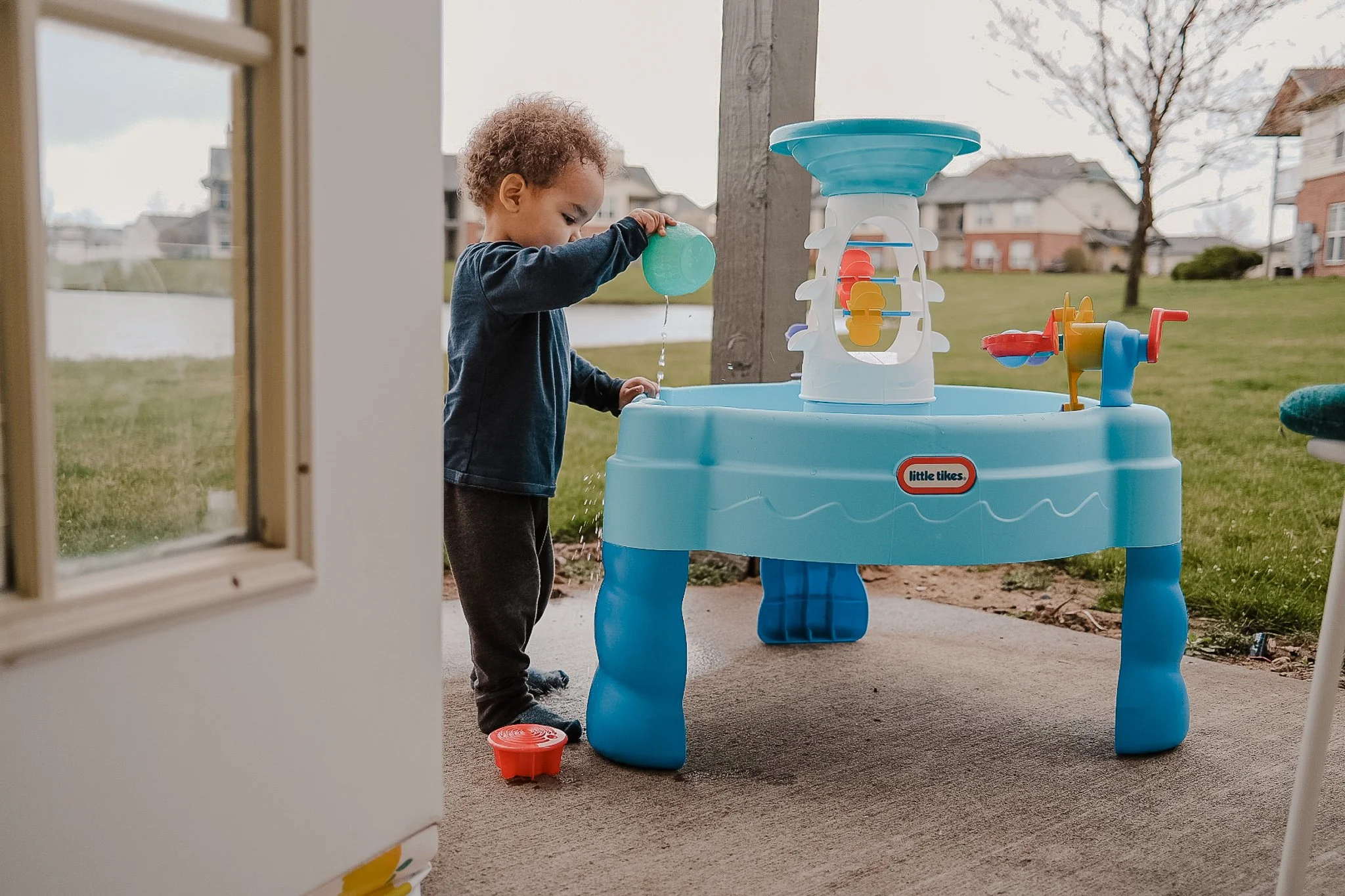
To create a Catholic or Bible-themed sensory bin, start by choosing a theme for your sensory bin. This can be based on a Bible story or a specific Catholic tradition, such as the Nativity or the Last Supper. Once you have decided on your theme, choose a container that is appropriate for the size of your materials and the space where the sensory bin will be used. A plastic container or tray works well.
Next, collect materials that are related to your chosen theme. For example, if your theme is the Nativity, you can use small figurines of Mary, Joseph, and the Baby Jesus, hay or straw, and star-shaped glitter. Fill your container with your materials, making sure to distribute them evenly. You can also add sensory materials such as rice or sand to provide a tactile experience.
Introduce the sensory bin to your child and let them explore. Encourage them to touch, feel, and manipulate the materials while discussing the theme and related Catholic or Bible concepts. You can even read related Bible or saint stories as they’re exploring. Ask open-ended questions to prompt discussion and reinforce learning as your child plays. For example, "Can you tell me what happened in the story of the Nativity?" or "Is this Cross big or little?"
As you use your sensory bin over time, consider adding new materials or changing the theme to keep it fresh and engaging for your child. When finished, clean up the sensory bin and store the materials for future use. Repeat the process with new themes and materials to continue exploring Catholic and Bible concepts through sensory play.
3. Make a Prayer Jar
To introduce this activity to preschoolers, start by explaining that a prayer jar is a special jar that helps us remember to pray for others. Show them the jar and let them help decorate it with craft supplies like paint, markers, stickers, or ribbon. You can also print out religious images or quotes to glue onto the jar.
Next, encourage your child to think of people they want to pray for, such as family members, friends, or people in the community. Help them write down their prayer requests or intentions on small pieces of paper. The prayer requests can be as simple or specific as they want.
Fold the prayer requests and place them inside the jar. Explain to your child that every day, you will take turns choosing a piece of paper from the jar and reading the prayer request aloud. Then, say a prayer for the person or intention together.
In the jar you can also include different types of prayer like “say a Hail Mary” or “sing Salve Regina”.
Overall, making a prayer jar is a great way to introduce preschoolers to the concept of prayer and help them build a habit of it.
4. Hands-On Mass at Home
To role-play Mass at home, I would start by gathering some items we can use for the service. For example, we can use a small table or bench as the altar and cover it with a white cloth. Then, we can place a crucifix, candles, and a Bible on the altar to make it look like a real church. Next, I would explain the different roles in the Mass, such as the priest, altar server, and congregation. We can take turns playing each role, and I would encourage my child to participate in the prayers and responses.
For the role of the priest, I would explain the basic actions and words that the priest does during the Mass, such as blessing the bread and wine and saying the Eucharistic Prayer. I can also show my child how to hold their hands and make the sign of the cross. As the altar server, I can demonstrate how to assist the priest during the Mass, such as holding the book or ringing the bell. We can also practice setting up the altar with the gathered items. For the congregation, I would encourage my child to participate in the responses and prayers, such as the Creed or Credo and the hymns.
Overall, role-playing a Catholic Mass is a fun and interactive way to introduce children to the different elements of the Mass and help them understand its significance. It can also be a great way to reinforce the importance of participation and reverence at Mass.
5. Sing Catholic Hymns and Songs
Singing traditional Catholic hymns is a great way to introduce your child to the rich musical heritage of the Catholic Church. First, choose a few hymns you know well and feel comfortable singing with your child. Popular traditional hymns like "Holy God We Praise Thy Name” or "Hail Holy Queen Enthroned Above” are usually quite easy to learn.
When you're ready to start singing, find a recording of the hymn you would like to learn and play it a few times. Begin by singing the hymn yourself, and encourage your child to listen and follow along. Once your child is familiar with the tune, you can start singing together. If you have a talent for music, you can also find sheet music and try to learn the song on your instrument of choice.
Singing Catholic hymns with your child is not only a fun activity but can also be a way to teach them about the faith and tap into the power of prayer through music.
Here are a few hymns to get you started:
-
Tantum Ergo
-
Holy God we Praise Thy Name
-
Salve Regina
-
Immaculate Mary
-
Sing, My Tongue, the Savior's Glory
-
Come, Holy Ghost
-
Holy, Holy, Holy
-
Stabat Mater Dolorosa
-
Alleluia, Sing to Jesus
-
Adoro Te Devote
6. A Rosary Walk
To do a rosary walk with your child, start by finding a suitable outdoor space where you can set up sensory materials along your path. You can use a small area in your backyard or a nearby park. Gather various materials such as sand, pebbles, grass, and other materials that your child can walk on barefoot or with shoes.
Once you have your materials, lay out a path for your child to walk on. You can use a simple straight line or create a more intricate design. Along the path, place beads or markers to represent the prayers of the rosary. As your child walks along the path, guide them through the prayers of the rosary, encouraging them to touch each bead or marker as they go.
Overall, a sensory rosary walk is a fun and engaging way to incorporate prayer and sensory play into your child's spiritual development. It can also be adapted to different ages and abilities by varying the materials used and the complexity of the path. This activity can be a great way to get your prayer in and let your kids get their wiggles out!
7. Beautiful Catholic Toys
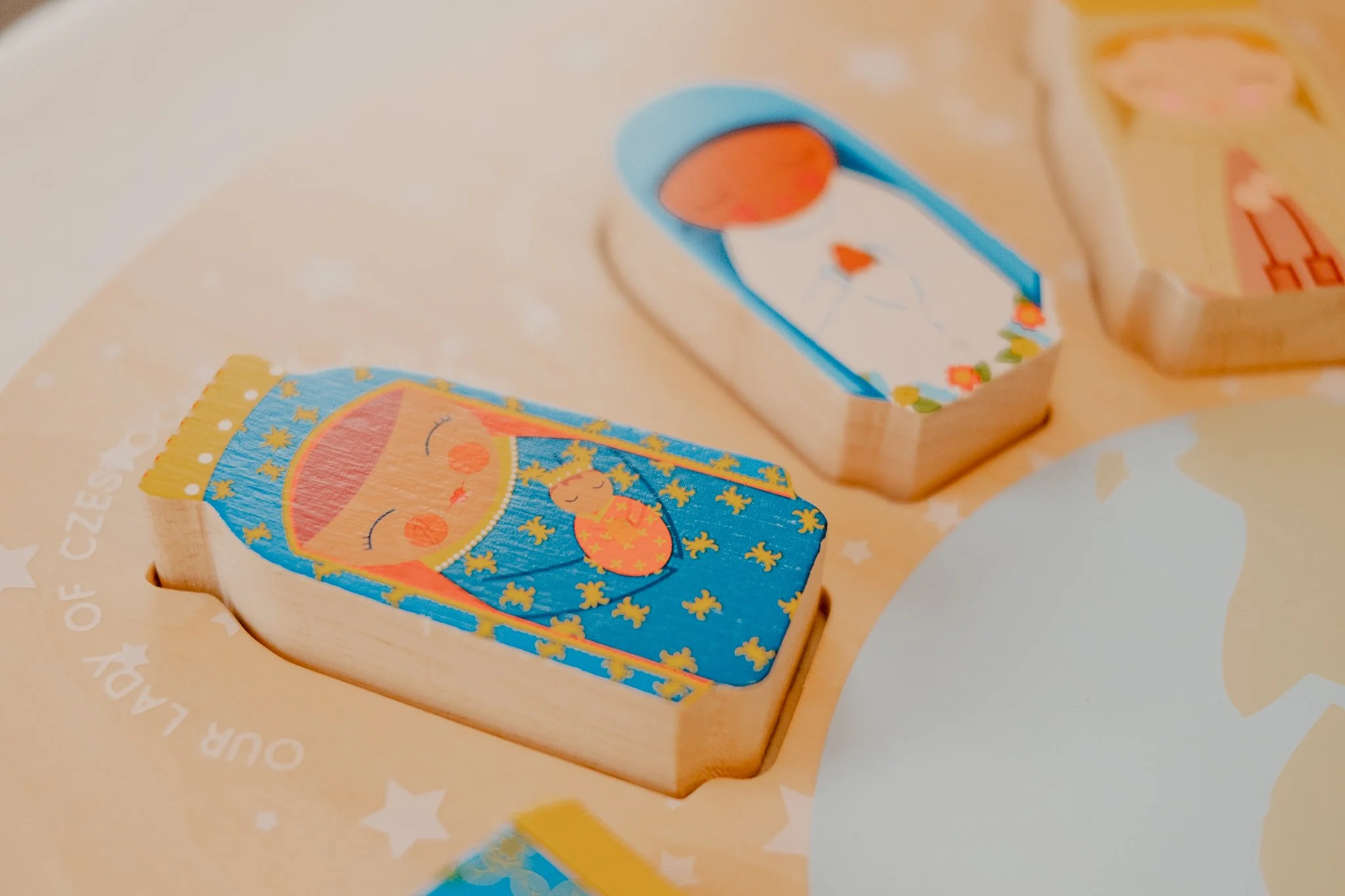
Catholic toys can be a fantastic resource for parents who want to teach their children about the faith in a fun and interactive way. One of our favorite brands for Catholic toys is Shining Light Dolls. Their water-reveal cards, busy book, and Mass Play set are all wonderful tools for parents to use when teaching their children about the Mass and Catholic traditions. The water-reveal cards allow children to discover hidden images and symbols related to the faith, while the busy book provides a hands-on way for children to learn about different Catechism topics. The Mass Play set is also a great way for children to role-play and act out the Mass, helping to reinforce what they have learned.
Another fantastic brand for Catholic toys is Be a Heart, which offers a wide range of toys and activities for children. Their Holy Family doll set and Mary dress up doll are great tools for parents to use when teaching their children about important figures in Catholicism. Their Holy Land playmat is also a wonderful addition to any Catholic living room or playroom. With these toys, children can engage in imaginative play while learning about the Catholic faith and its rich history.
Finally, Gather and Pray offers beautiful sensory rosaries that can help children engage with prayer in a tangible way. These rosaries feature a variety of textures and materials, providing a unique sensory experience for children while they pray. Incorporating these Catholic toys into your child's playtime can help them develop a deeper understanding and appreciation for the faith.
These activities are a great way to introduce your preschooler to the Catholic faith while making the learning process fun and engaging. From playing "Saints Says" to creating Catholic-themed sensory bins and making a prayer jar, each activity offers a unique approach to learning and exploring Catholic concepts. Incorporating these activities into your child's daily routine can help them develop a deeper understanding of their faith and build a strong foundation for their spiritual growth. So, don't hesitate to try out these activities and make learning about Catholicism a joyful experience for your preschooler!
🙏 Ready to Build Your Little One’s Faith Foundation?
Our Catholic Faith Formation Starter Kit gathers Bible Memory Flashcards, Catechism Flashcards & Charts, Catholic Prayer Cards, and Saint Stories in one place, so it’s easy to keep prayers, saints, and Bible verses woven into your everyday play.