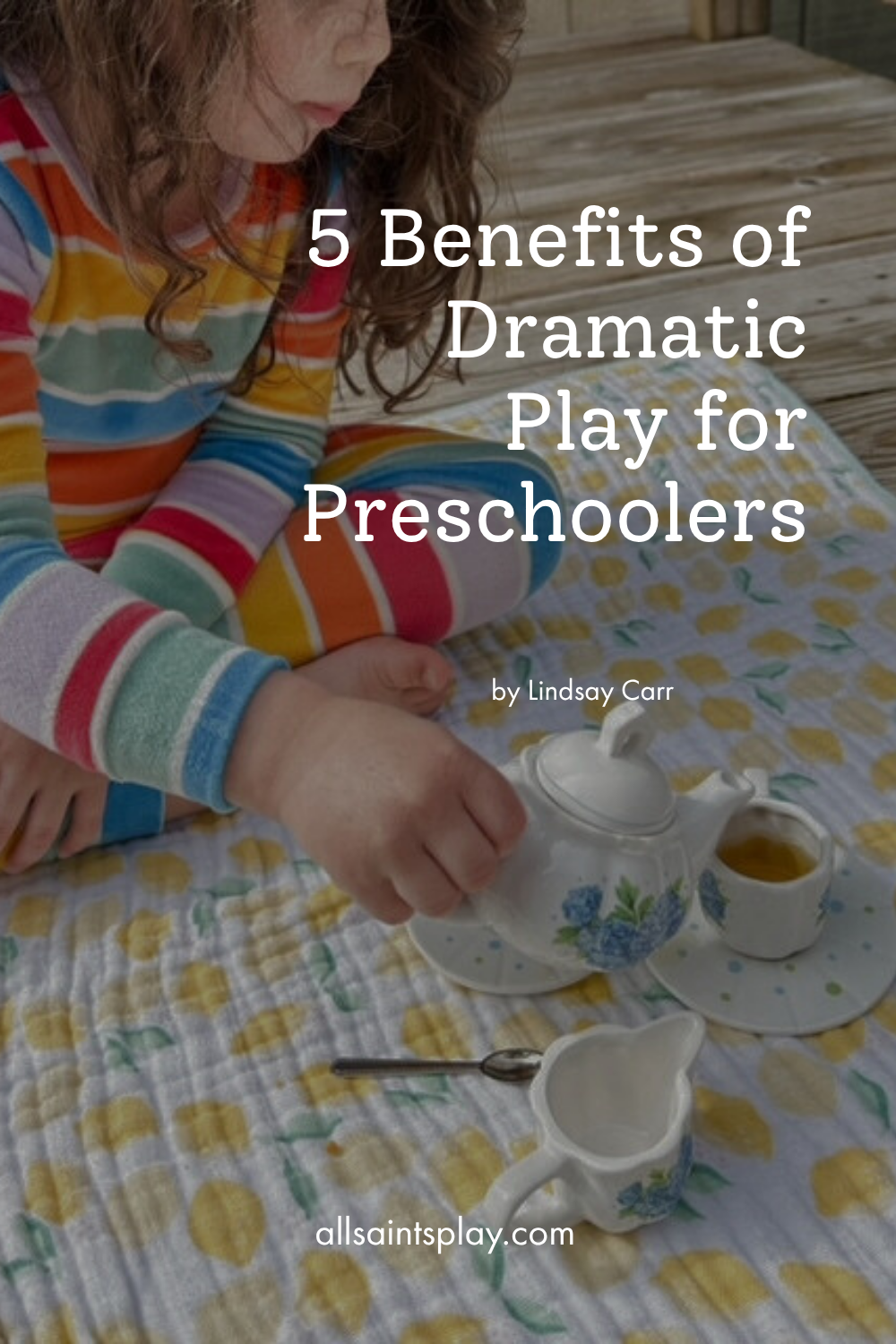

5 Benefits of Dramatic Play for Preschoolers
Apr 08, 2024With their boundless imagination and curiosity, preschoolers are like sponges ready to absorb everything around them. Engaging in dramatic play, where they can pretend to be anything or anyone they want, isn't just a fun pastime—it's a crucial aspect of their development. We're going to delve into the myriad benefits of dramatic play for preschoolers and why it should be encouraged both at home and in educational settings. Let's dig in!
👑 Free Saint Play Ideas for Little Ones
Pretending to be a saint can be a sweet way to learn about the faith. Our free Catholic Creativity Corner has saint crafts, coloring pages, and feast day activities that can spark your preschooler’s next round of imaginative play.
1. Cognitive Development:
Dramatic play encourages children to think creatively, solve problems, and make decisions. When they engage in role-playing scenarios, whether it's pretending to be a doctor, a chef, or a superhero, they're exercising their cognitive abilities. They learn to think on their feet, imagine different outcomes, and adapt their actions accordingly. This type of play also helps them understand complex concepts by putting them into relatable contexts.
2. Social Skills:
One of the most significant benefits of dramatic play is its positive impact on social development. When children engage in pretend play together, they learn invaluable social skills such as cooperation, negotiation, and empathy. They take on different roles, communicate with their peers, and navigate social interactions, laying the foundation for healthy relationships later on in life. Through role-playing, children also learn to understand the perspectives of others, fostering a sense of empathy and tolerance.
3. Language Development:
Dramatic play provides abundant opportunities for language development. As children immerse themselves in various roles and scenarios, they naturally engage in conversation, storytelling, and vocabulary expansion. They learn new words and phrases, experiment with language, and practice communication skills. Moreover, dramatic play encourages children to express themselves verbally, enhancing their confidence and fluency in language usage.
4. Emotional Regulation:
Pretend play serves as a safe space for children to explore and express their emotions. Whether they're acting out scenes of joy, sadness, anger, or fear, they learn to recognize and manage their feelings in a supportive environment. Through role-playing, children can experiment with different emotional responses and learn appropriate ways to cope with various situations. This emotional literacy is essential for their overall well-being and resilience.
5. Imagination and Creativity:
Perhaps the most obvious benefit of dramatic play is its stimulation of imagination and creativity. When children engage in pretend play, they enter a world of endless possibilities where they can let their imaginations run wild. They create scenarios, invent characters, and explore fantastical realms—all of which are vital for developing creative thinking skills. By encouraging imaginative play, parents and educators foster a lifelong love for creativity and innovation.
In conclusion, dramatic play is far more than just a form of entertainment for preschoolers—it's a fundamental aspect of their development. Through role-playing, children enhance their cognitive abilities, social skills, language proficiency, emotional regulation, and creativity. As parents and educators, we should actively encourage and facilitate dramatic play experiences, providing children with the tools and opportunities they need to explore, create, and grow. So, the next time you see your preschooler donning a makeshift cape or pretending to serve tea to imaginary friends, know that they're not just playing—they're learning and thriving!
🎭 Ready for a Playful, Faith-Filled Preschool Year?
Little Lessons is our open-and-go Catholic preschool curriculum for ages 2–6, with 36 weeks of gentle lessons that weave prayer, saints, letters, math, and nature together with plenty of arts and play.